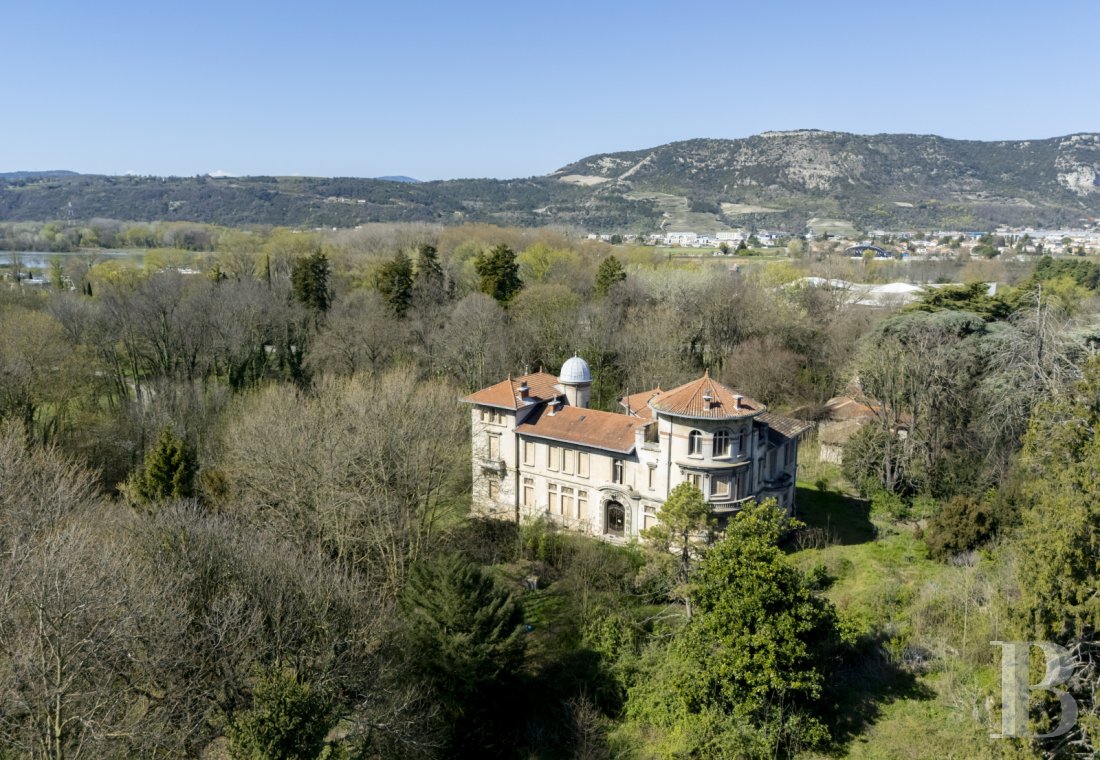




An early 20th-century Art Nouveau chateau listed as a historic monument,
set within 4 hectares of grounds in the heart of the capital of the Drôme
set within 4 hectares of grounds in the heart of the capital of the Drôme
Valence,
DROME
rhones-alps
26000
FR

Location
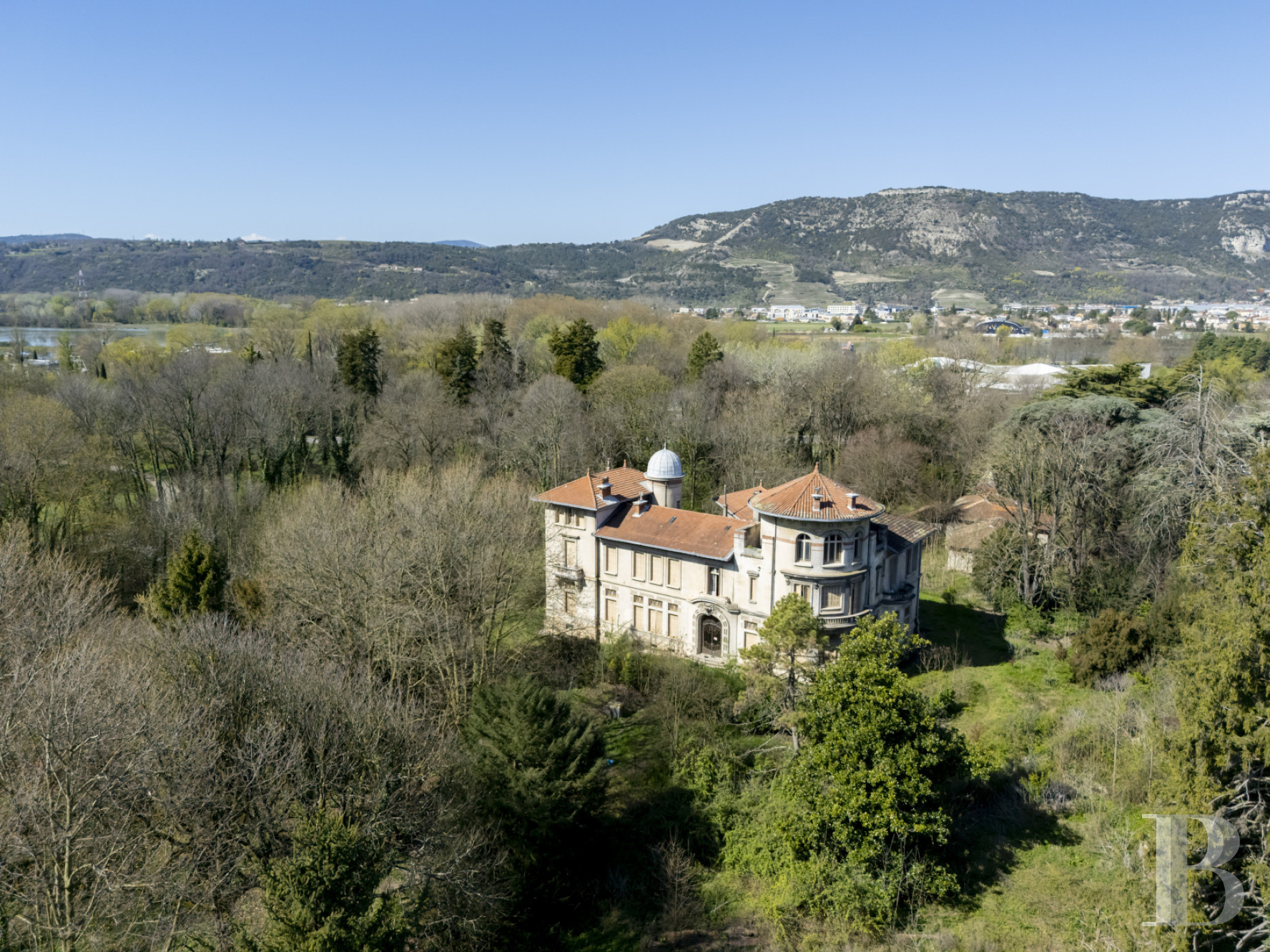
Set within 4 hectares of grounds, the chateau is situated 1 km south of the very centre of the capital of the Drôme, on the western border of the Drôme department, bordering the Ardèche, in the heart of the Auvergne-Rhône-Alpes region. The location has nearby amenities and shops, natural parks in the vicinity (notably the Vercors to the east and the Monts d’Ardèche to the west), and excellent rail and motorway links. By TGV, Lyon can be reached in 30 minutes from Valence TGV station, Marseille in 1 hour 5 minutes and Paris in 2 hours 15 minutes. The estate is situated 1 km from the Valence-Sud exit of the A7 motorway, which links Paris to the Côte d’Azur, and from the expressway leading to the A49 motorway, which connects Valence to Grenoble and Geneva.
Description
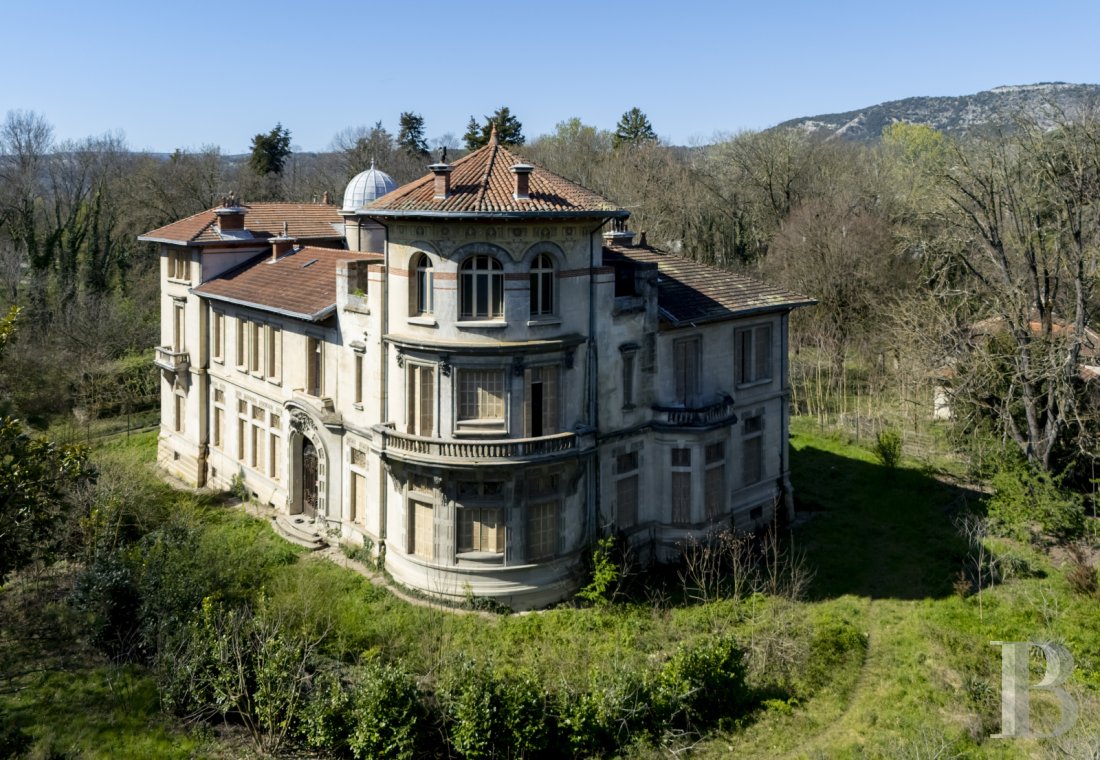
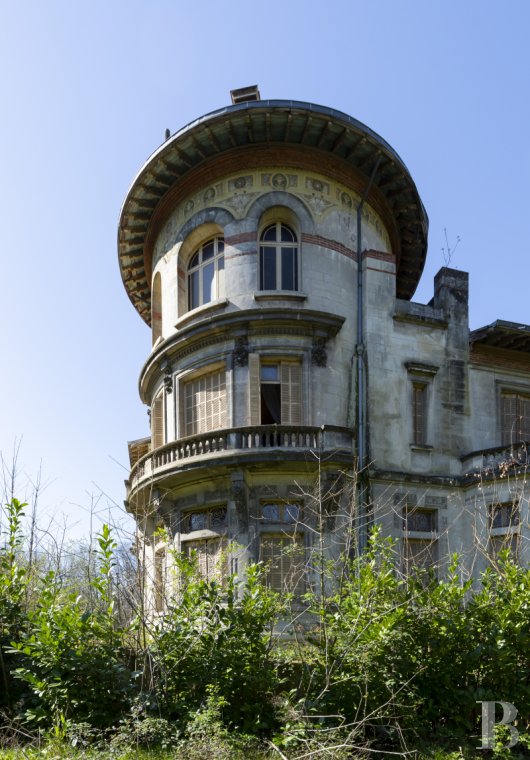
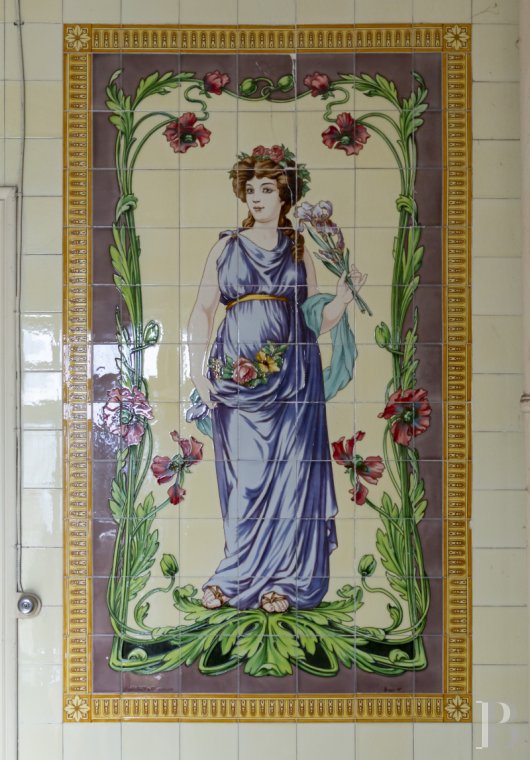
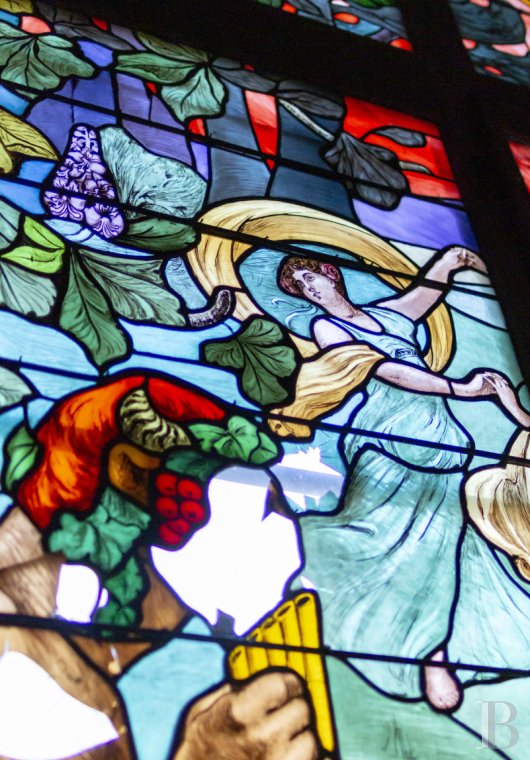
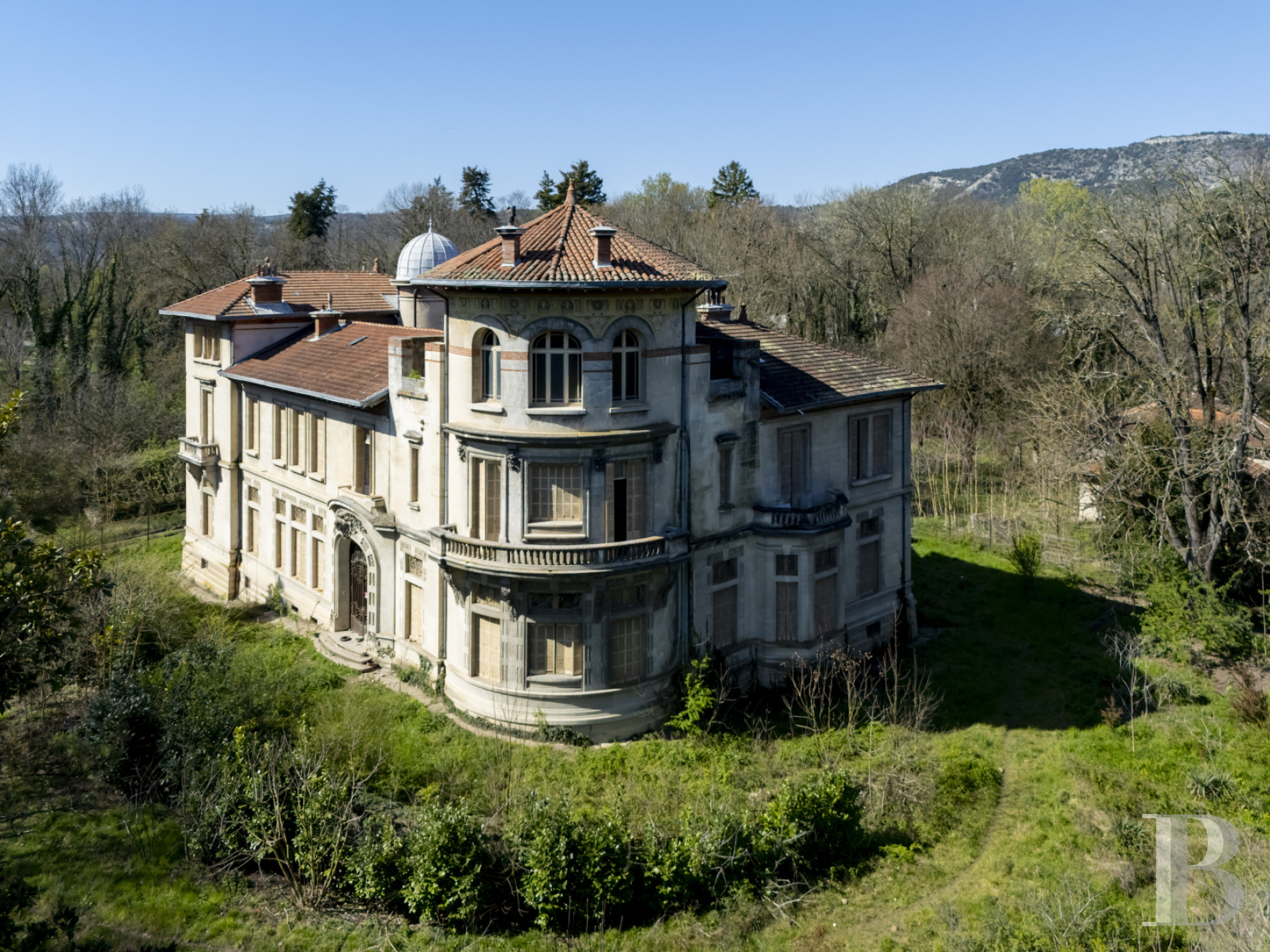
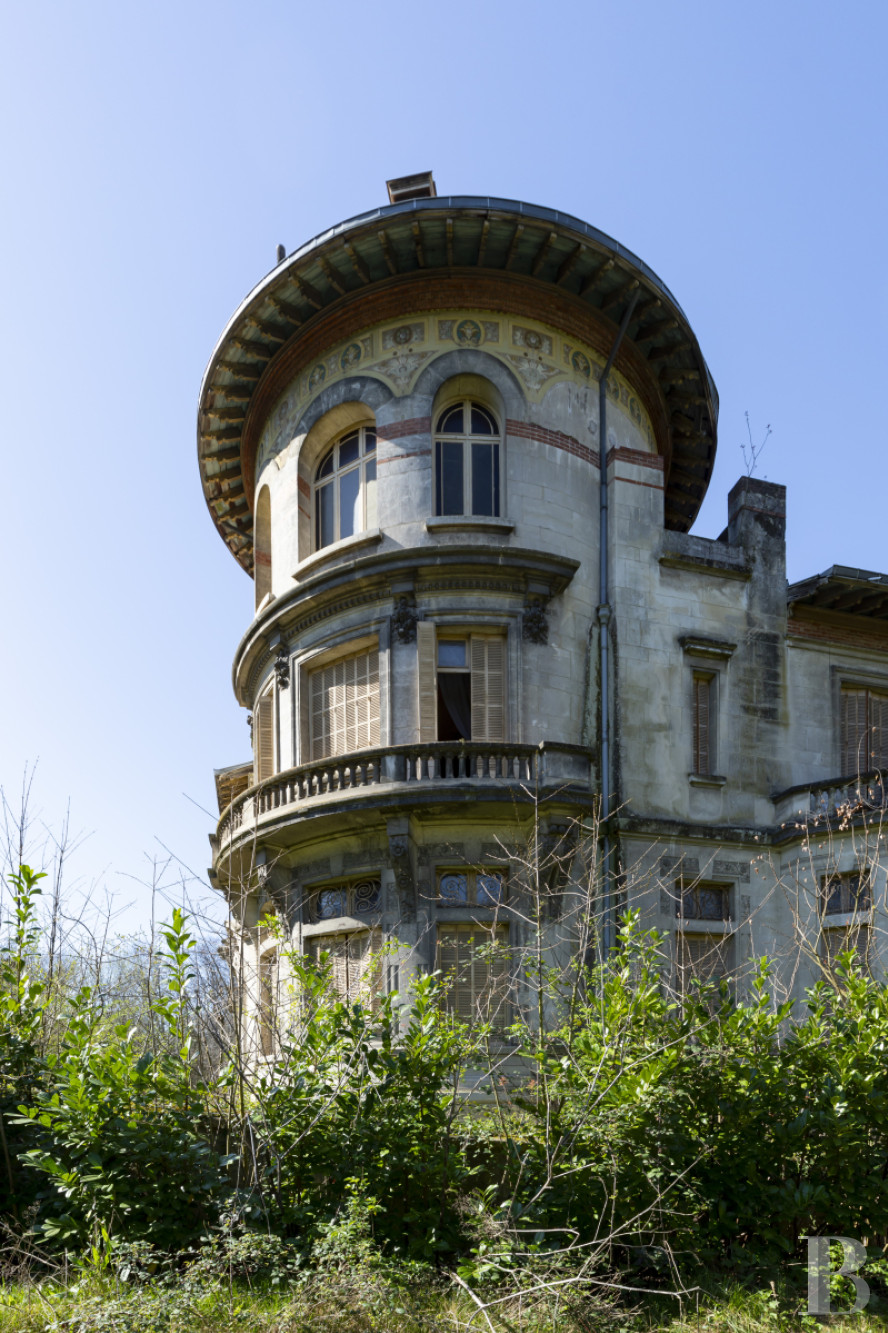
The building was constructed in the early 20th century at the request of Alfred Gayet, a mining engineer and inventor of a process for extracting and refining gold. To carry out this work, he was joined by the renowned architect Pierre Blein, with contributions from the painter Guillermin, the stained-glass artist Thomas, the interior designer Boulanger, and the landscape architects Luizet and Barret. The construction of the main house and its various outbuildings (caretaker’s house, farm buildings, dovecote and hydroelectric plant), as well as the landscaping of the grounds, were carried out between 1900 and 1904, under Blein’s direction. The chateau was adorned with Art Nouveau elements: remarkable painted decorations by Guillermin and Mangier, stained-glass windows from the Thomas workshop, and earthenware by Boulanger and Villeroy & Bosch. The residence, with its cut-stone facades and canal-tile roofs, comprises a central block and two wings at right angles, the right-hand wing featuring a rotunda and the left-hand wing a square tower. It has four storeys, including a basement with numerous cellars, and around 20 rooms spread across the three levels: a large entrance hall, two drawing rooms, games and reading rooms, a dining room, a kitchen and other utility spaces on the ground floor; a vast hall, five bedrooms and four bathrooms on the first floor; a spacious rotunda room, four staff bedrooms and five attics, one of which is convertible, on the second floor. The landscaped grounds, adorned with animal sculptures, cover 4.3 hectares and include a pond. Originally, canals were fed by the Épervière stream and led into a series of basins designed using the “rocailleurs” method. It should be noted that the elements listed as historic monuments include the entire residence (interior and exterior), the grounds, the outbuildings, the caretaker’s house, the disused factory building and the dovecote.
The chateau
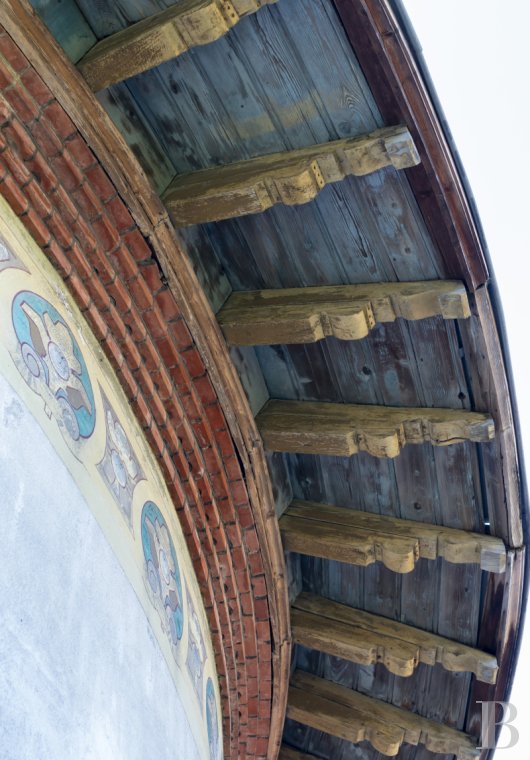
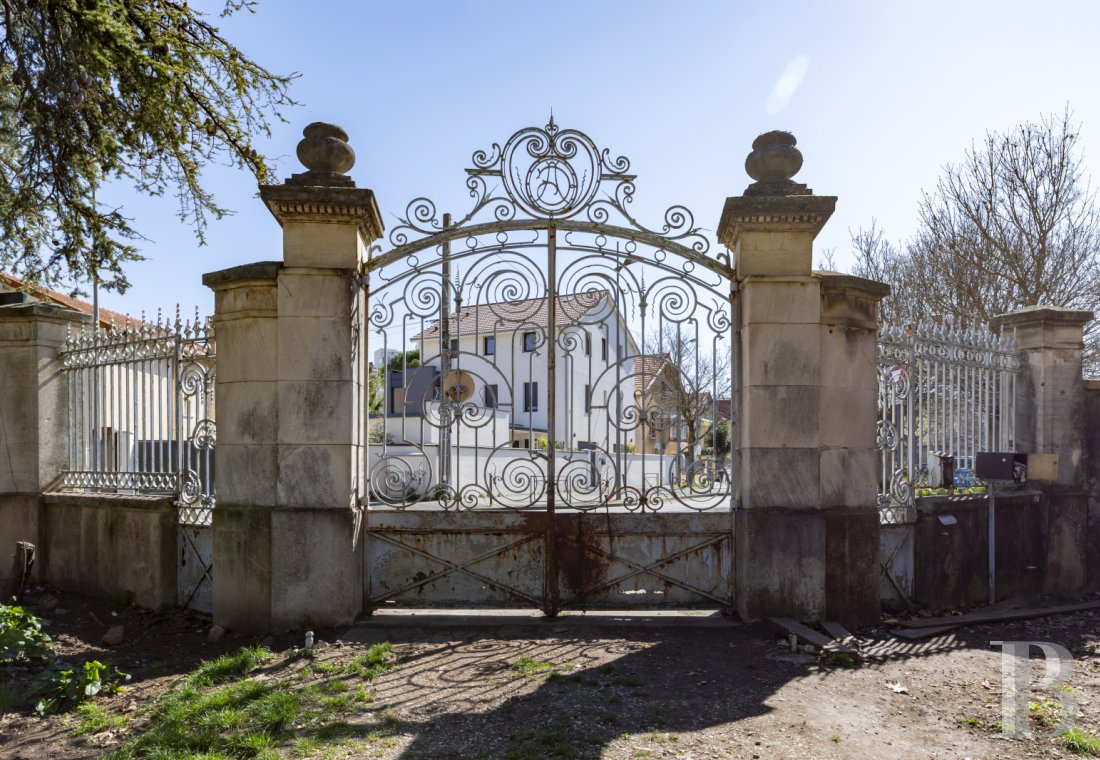
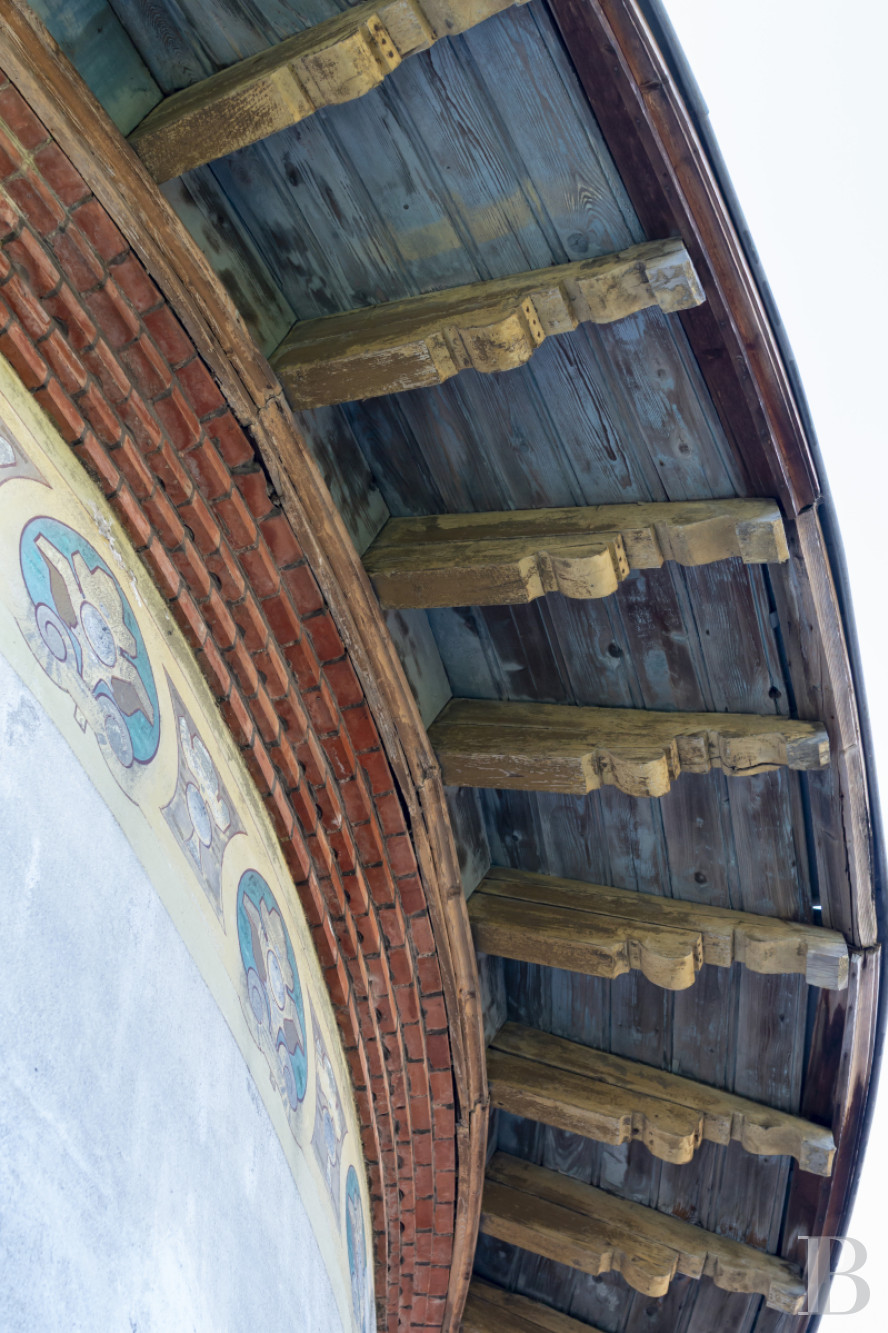
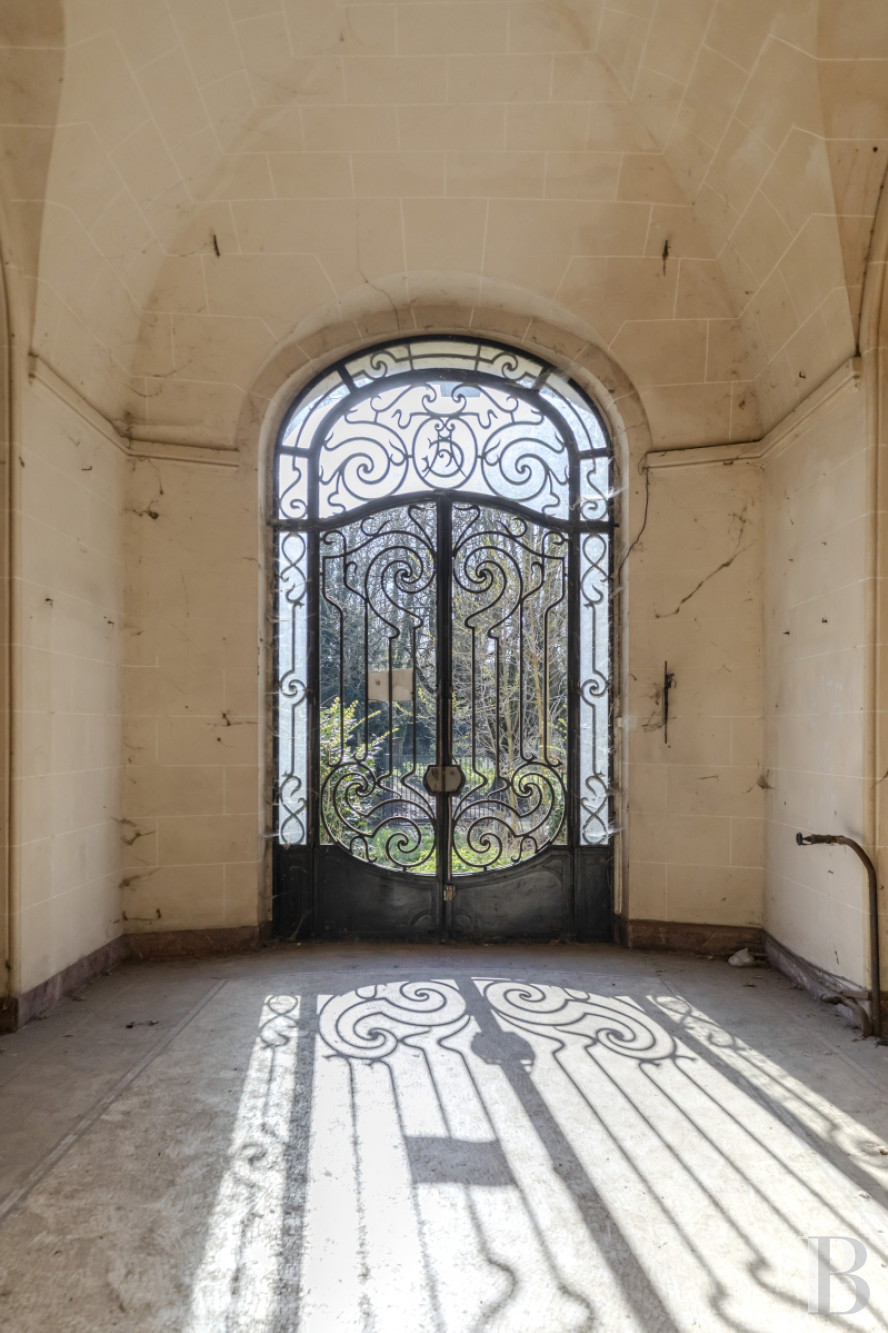
Marked at the start of the 20th century by the arrival of Art Nouveau, architect Pierre Blein proposed to the owner the construction of a building liberated from the traditional symmetry that had prevailed during the Classical and Neoclassical periods, although a high degree of regularity remains in the horizontal and vertical arrangement of the windows. Consequently, the entrance door, adorned with a mascaron, is not centred but lies in line with the avenue of plane trees connecting the house to the gatehouse at the estate’s entrance. The chateau’s main facade faces south. The corbels supporting the first-floor balconies at the two corners of the central section are finely carved. The storeys are organised into bays and separated by string courses. Thus distinguished from the lower parts of the building, the upper section of the rotunda is decorated with sgraffito. The undersides of the roof are painted blue and the beams brown. The other facades are mostly symmetrical, simpler in terms of ornamentation, and punctuated by straight windows with moulded frames, some of which have transoms, as well as by string courses.
The basement
With its very spacious landing and eight cellars (including a wine cellar), its concrete floors, its partly vaulted ceilings and its high windows, the lower level could be converted to make the most of its large floor area (approximately 320 m²). It is accessible from the ground floor via the grand staircase, which leads to all levels, and via a spiral staircase.
The ground floor
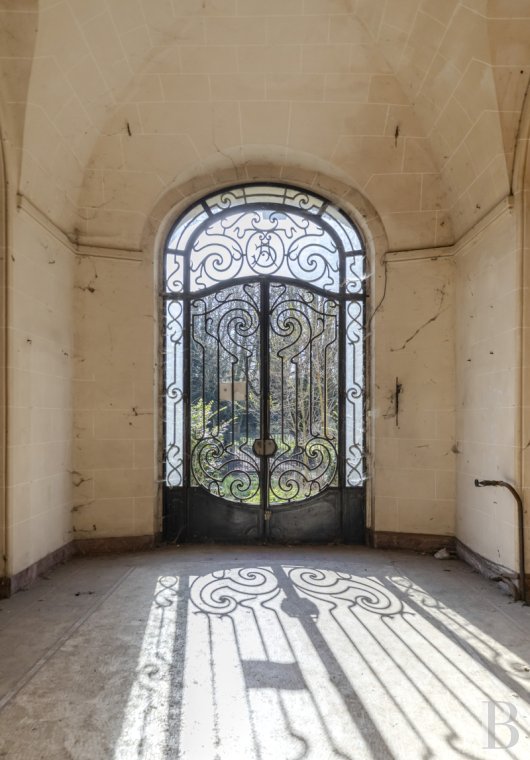
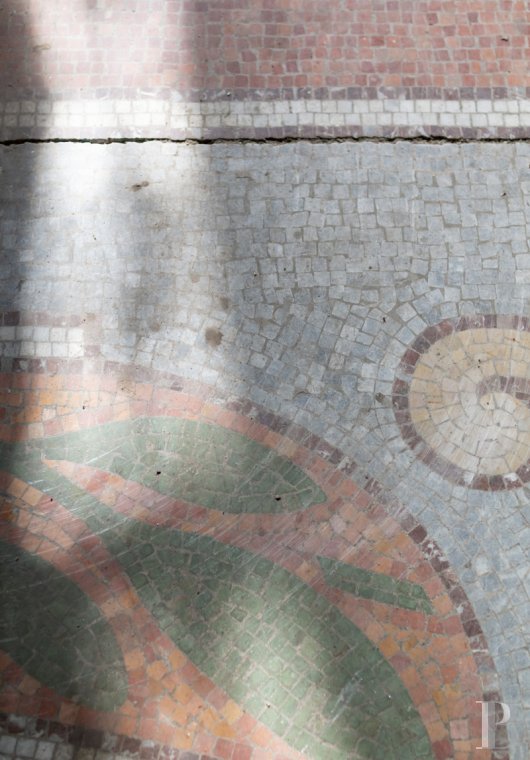
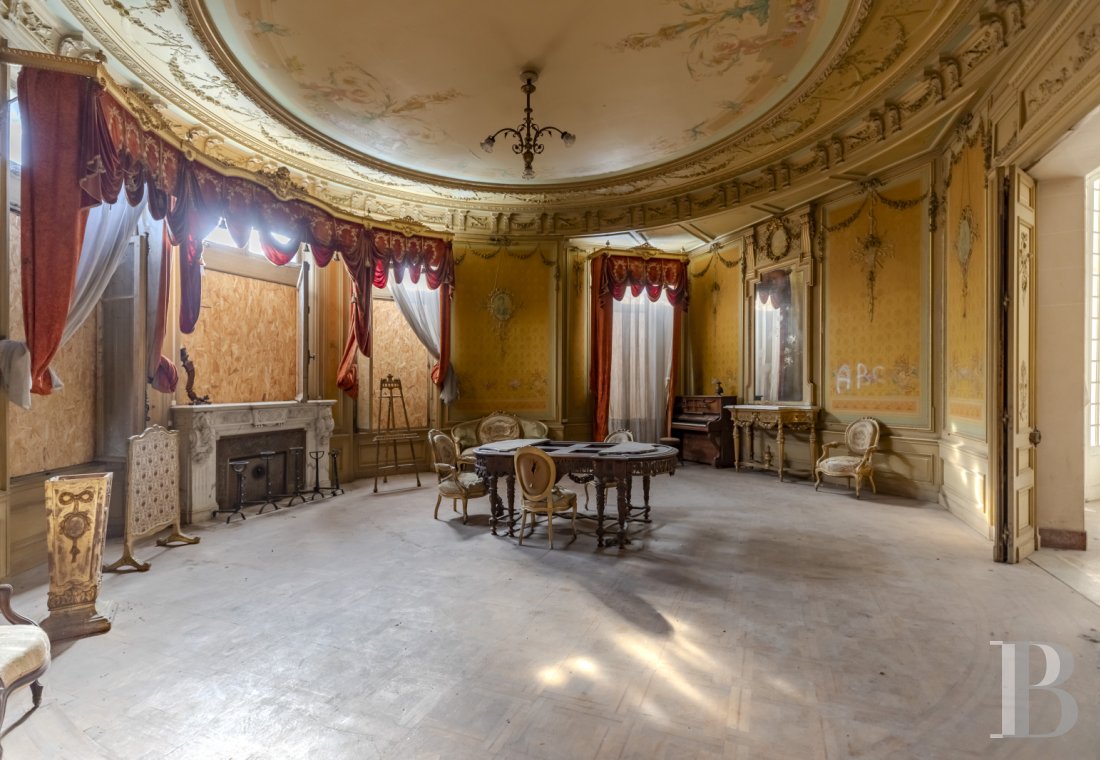
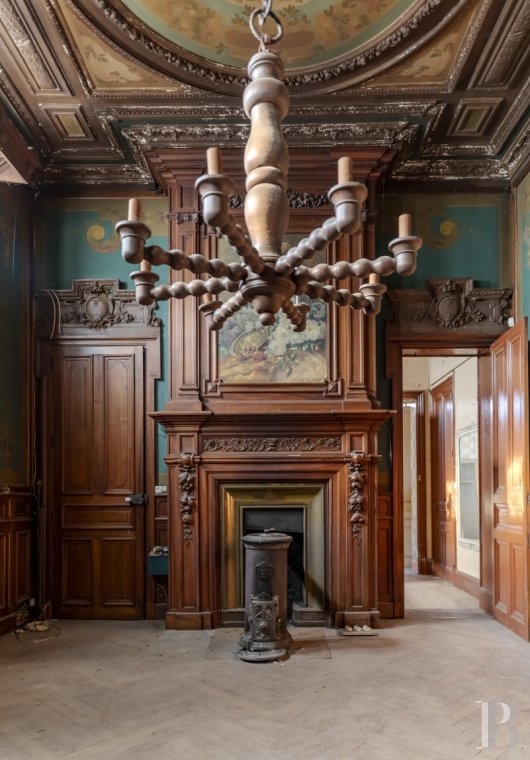
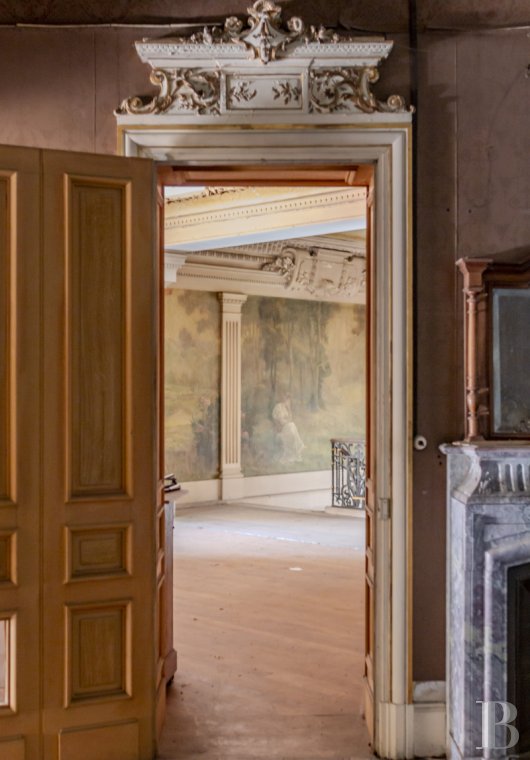
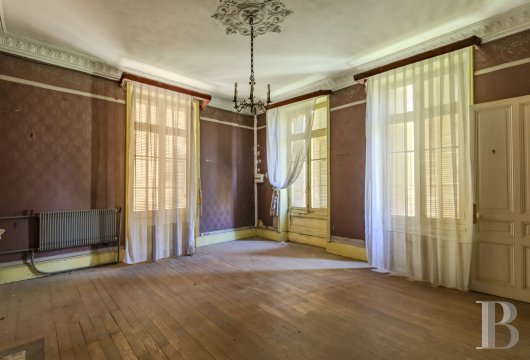
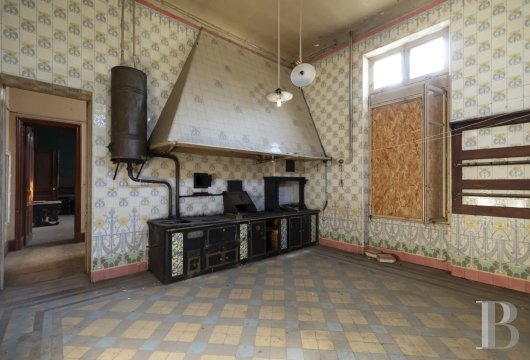
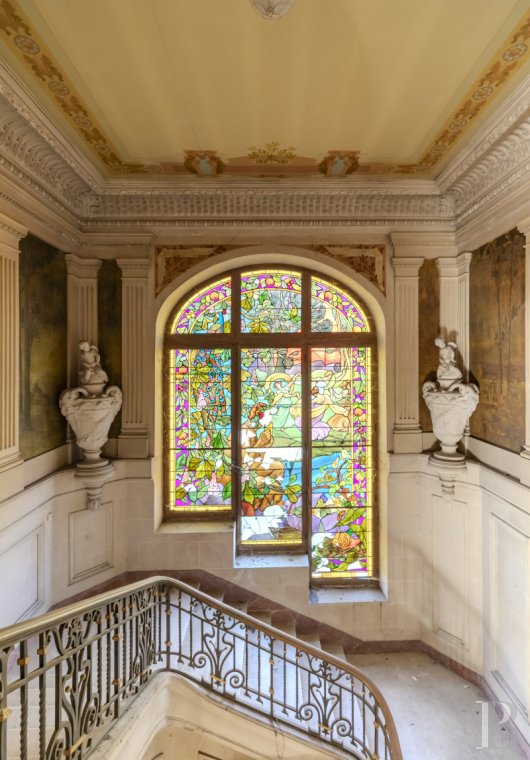
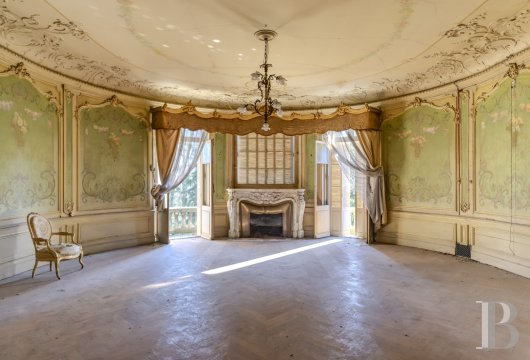
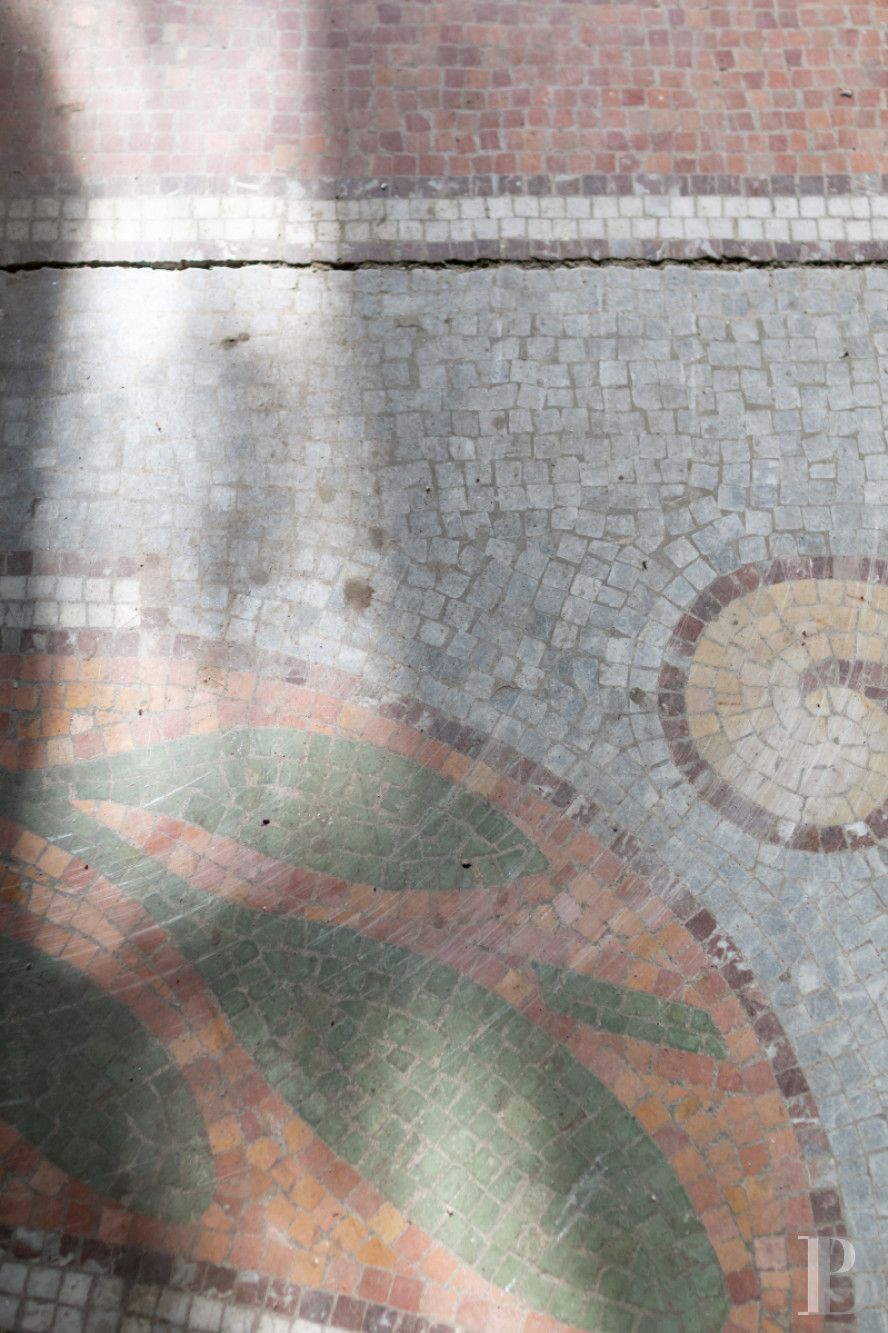
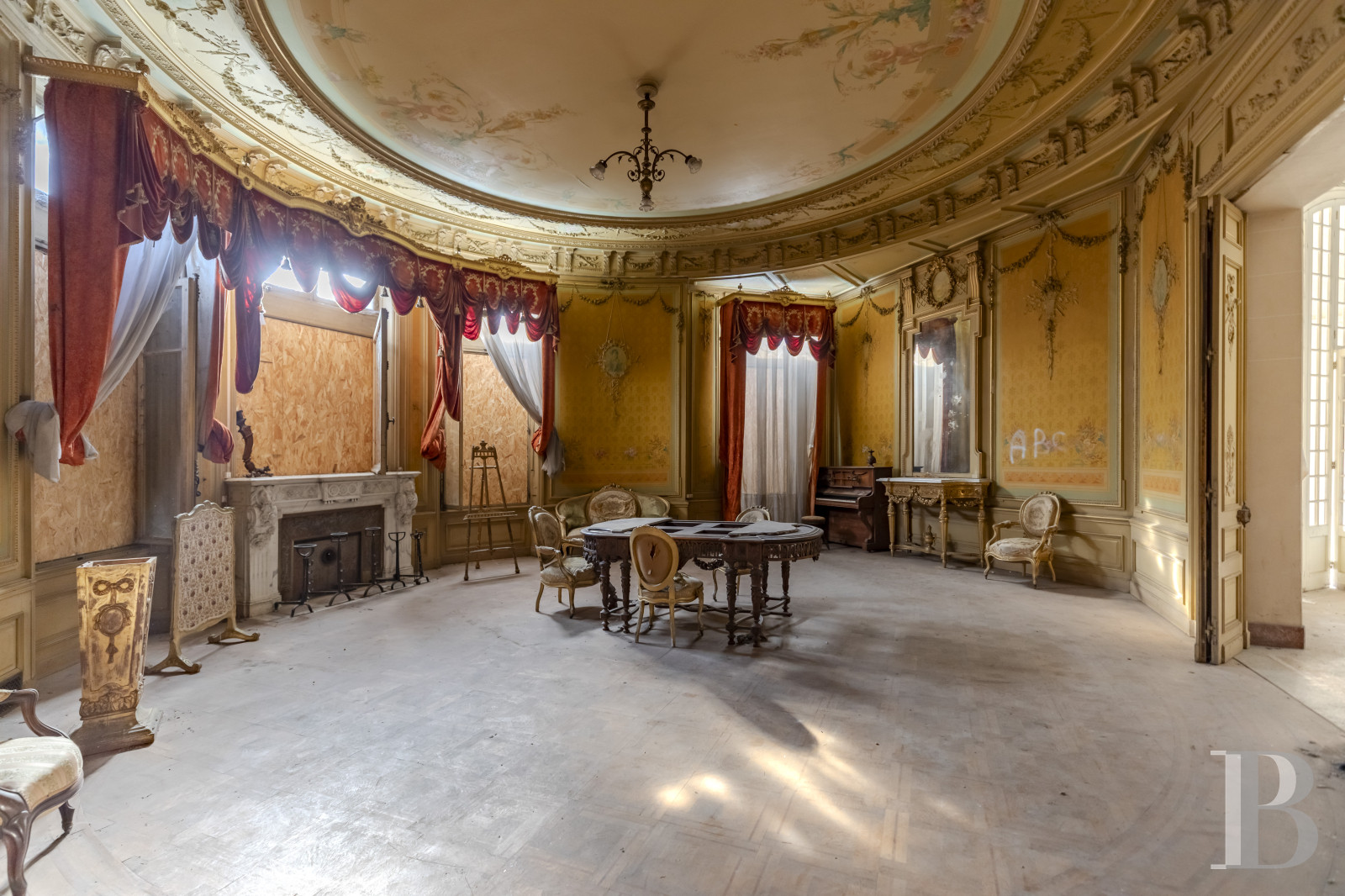
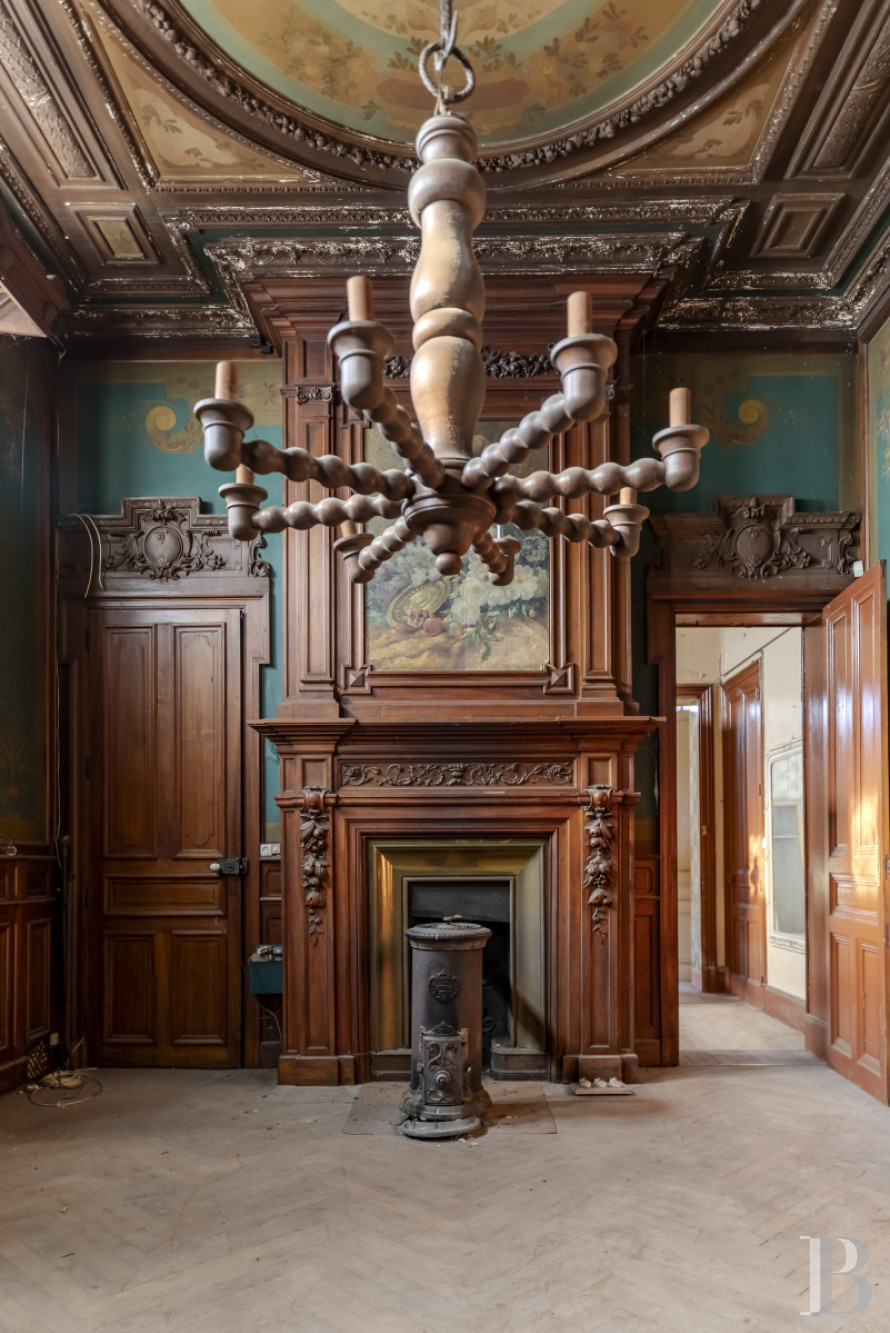
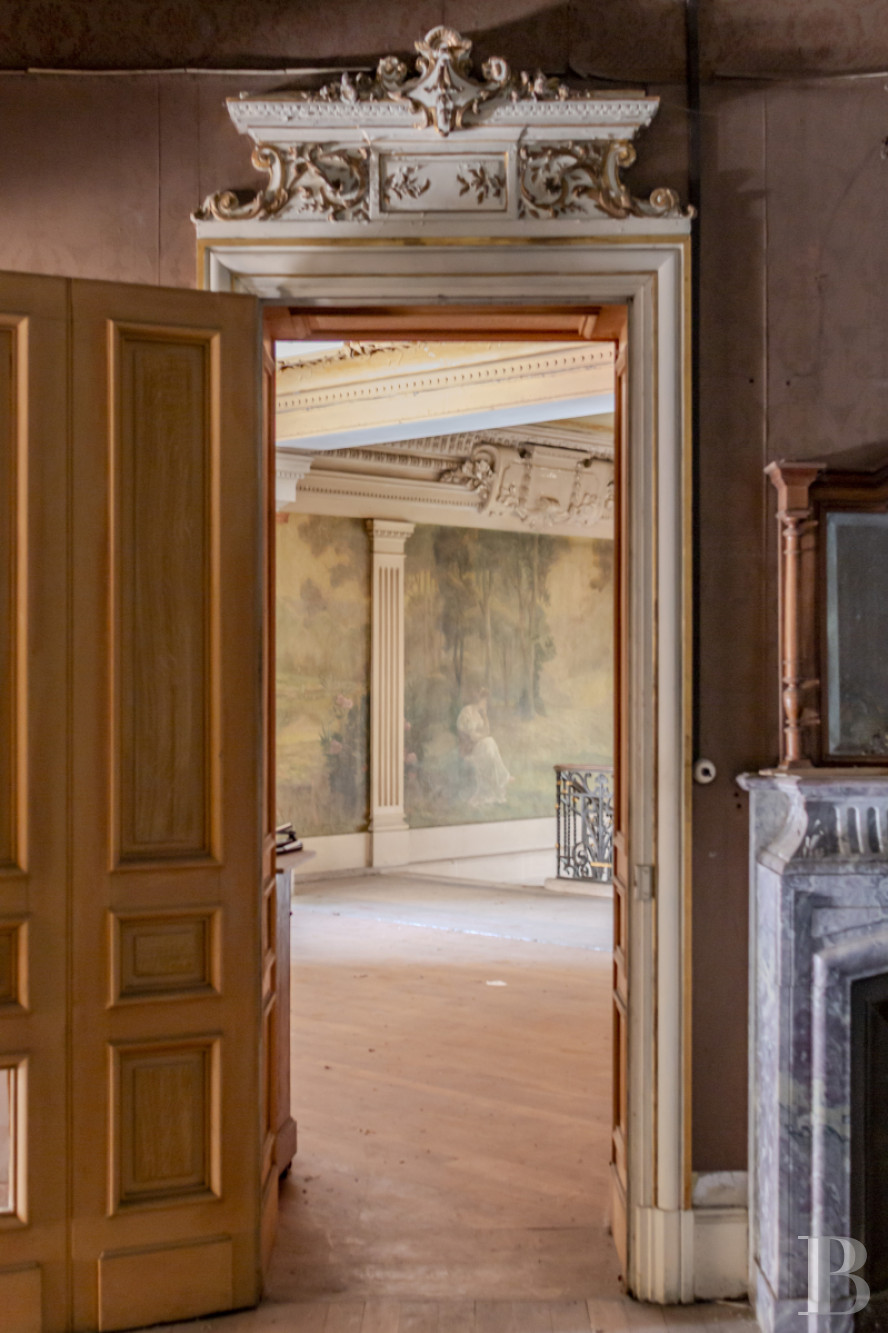
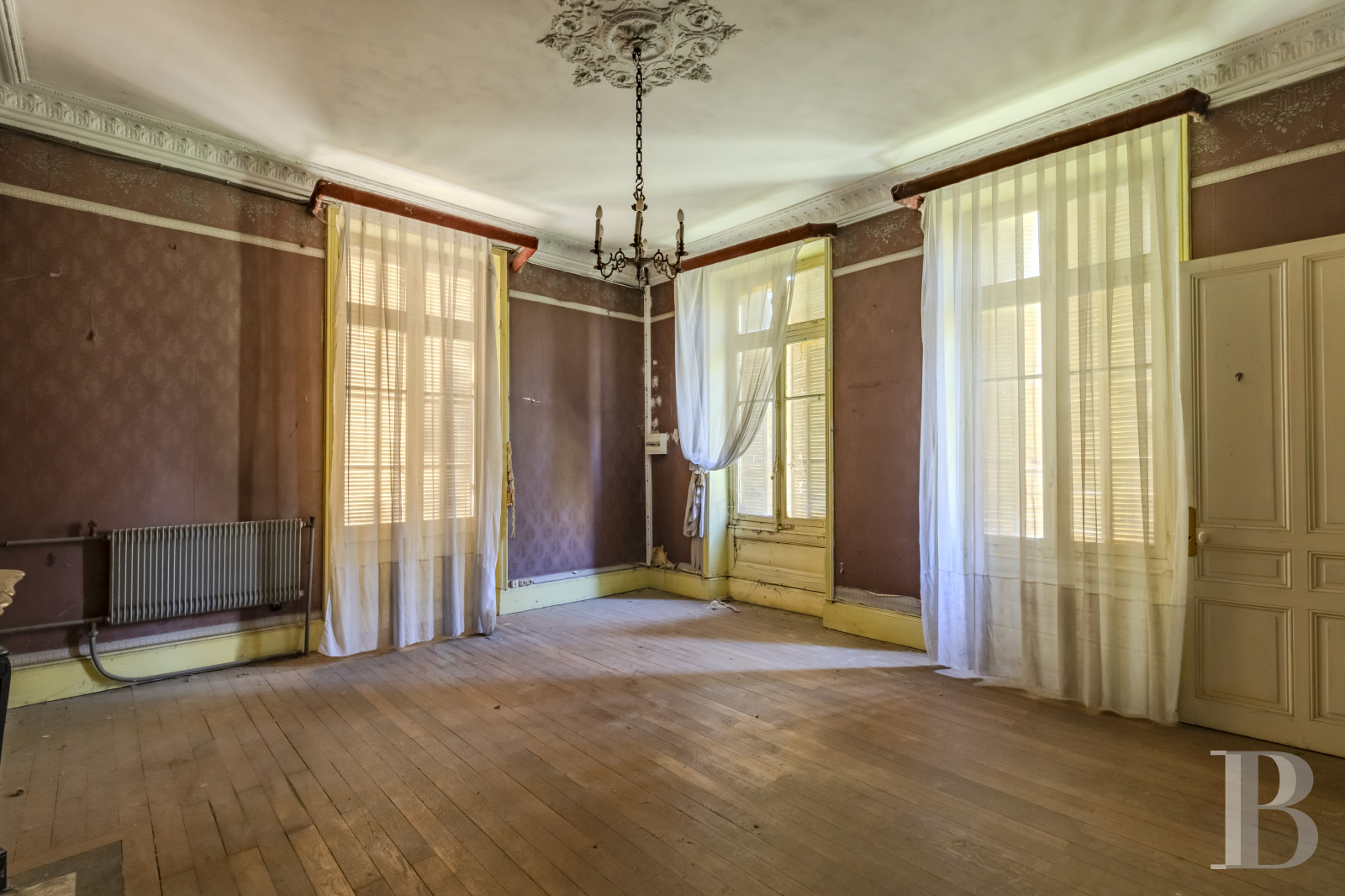
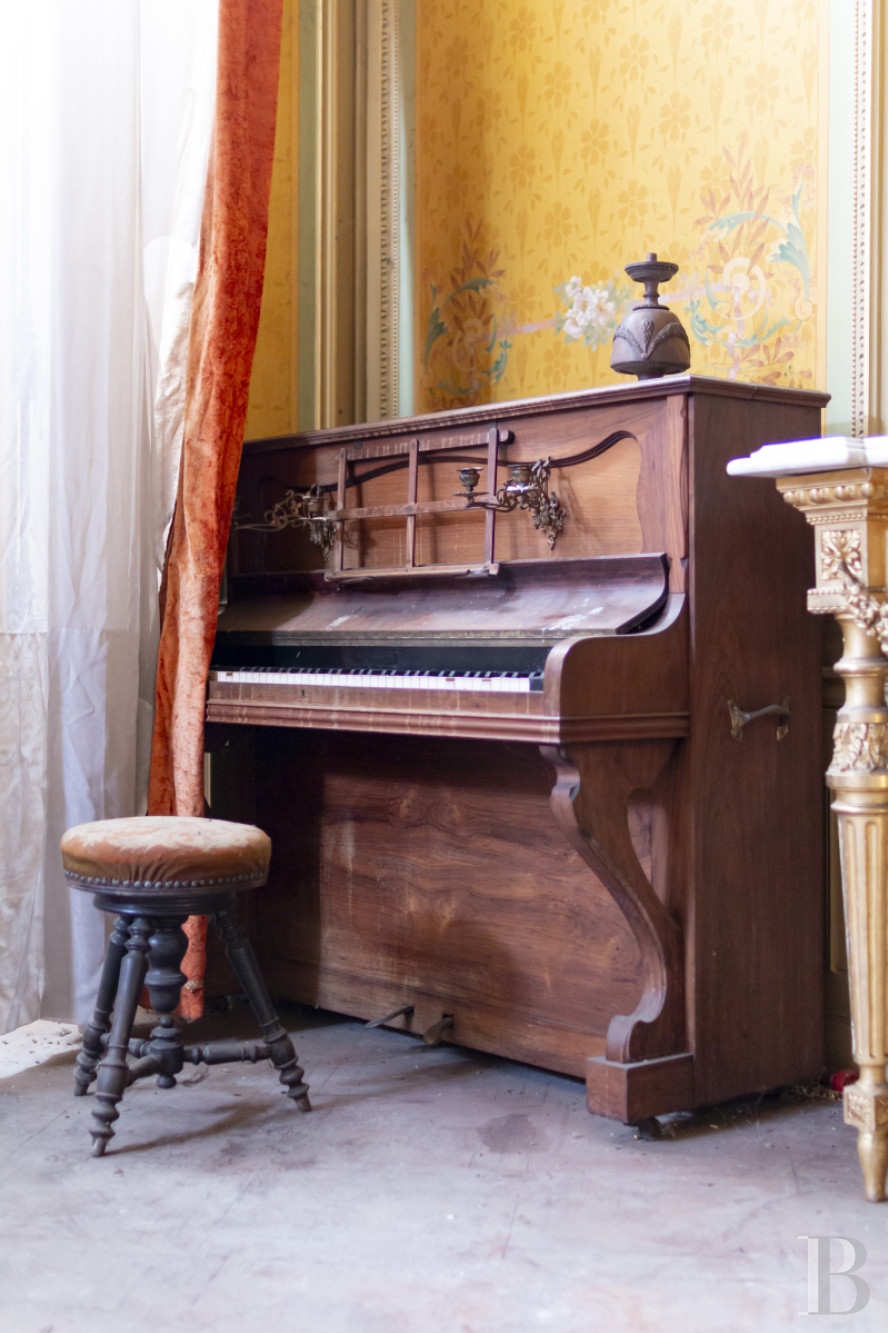
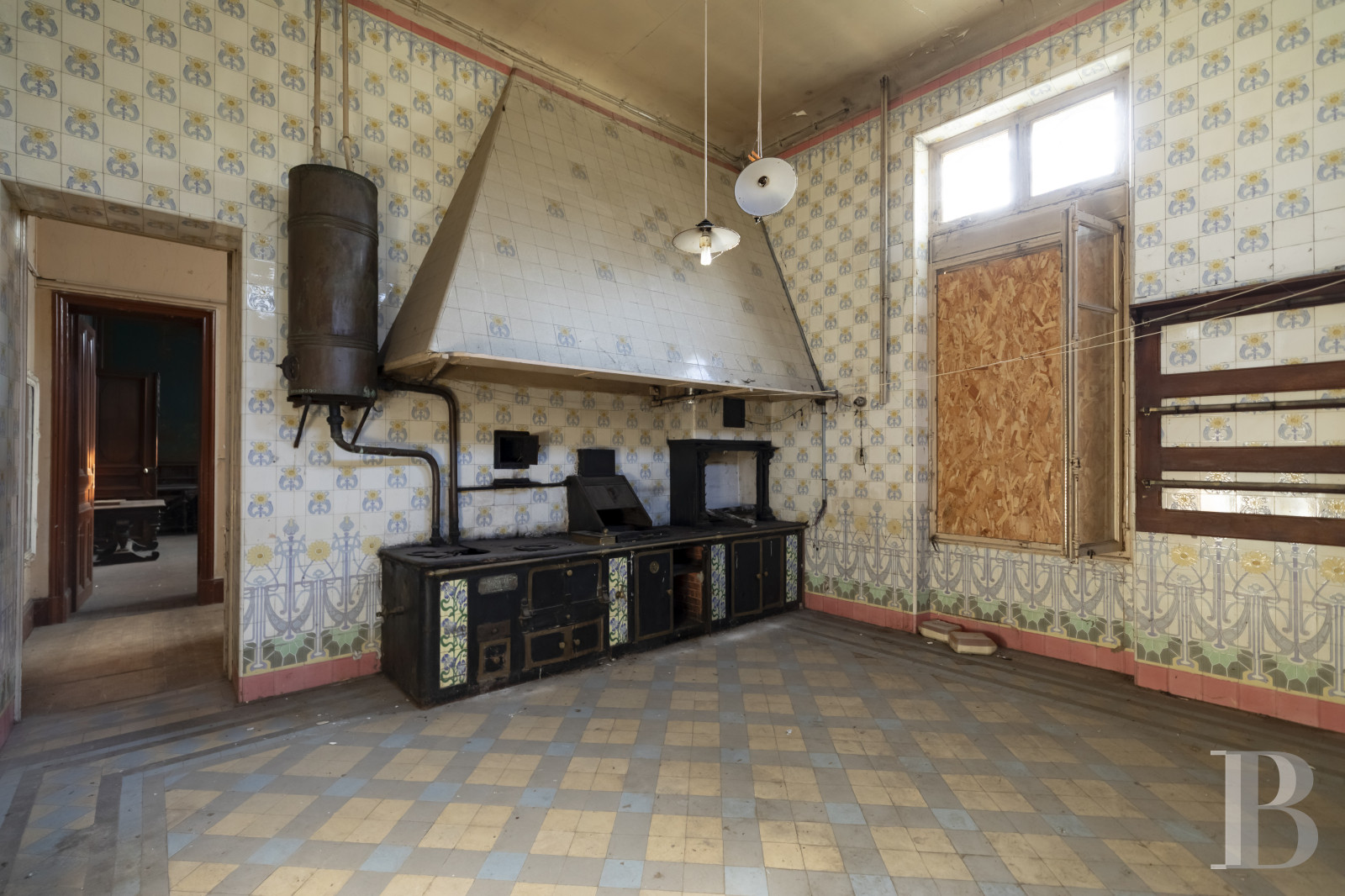
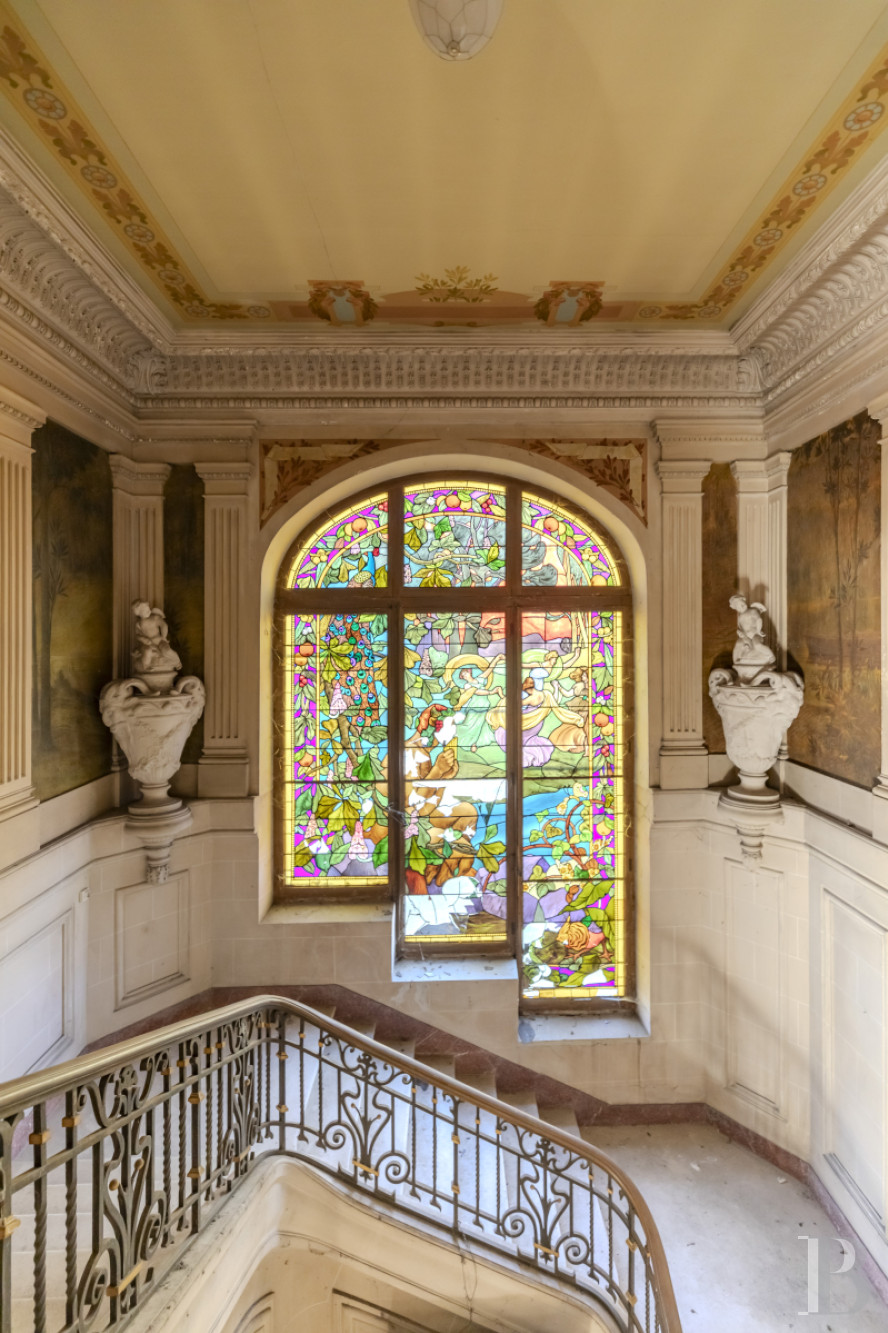
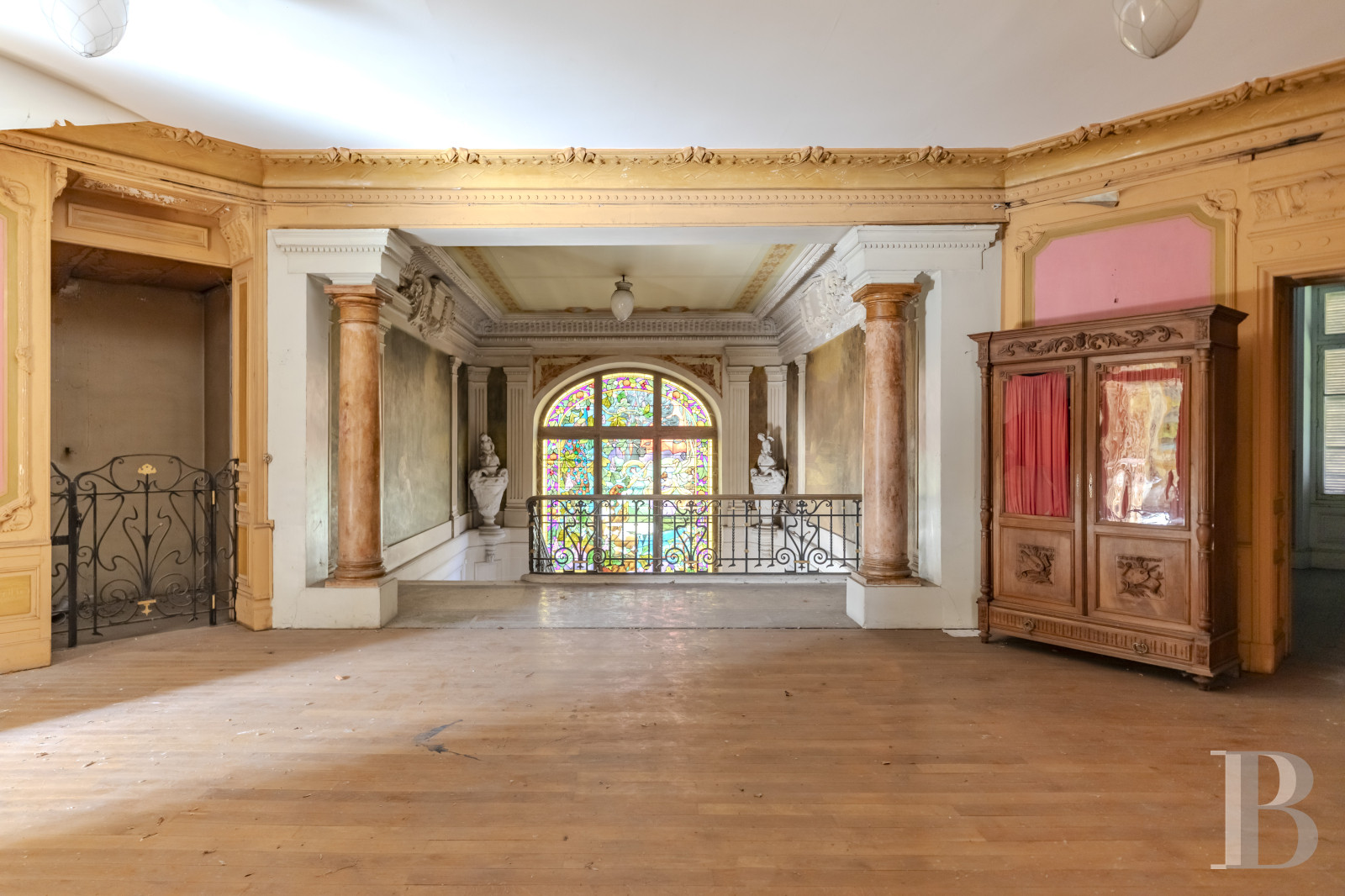
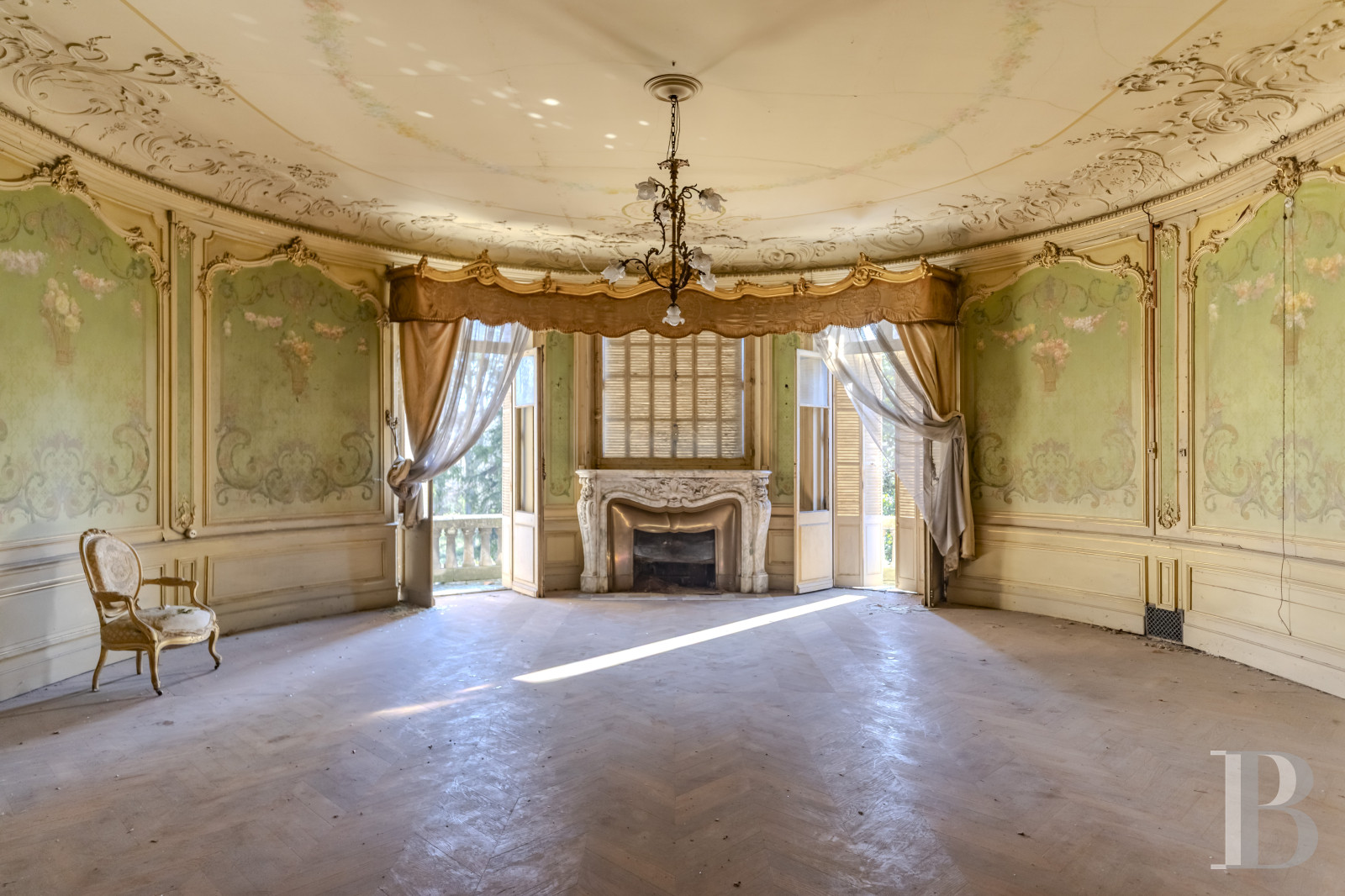
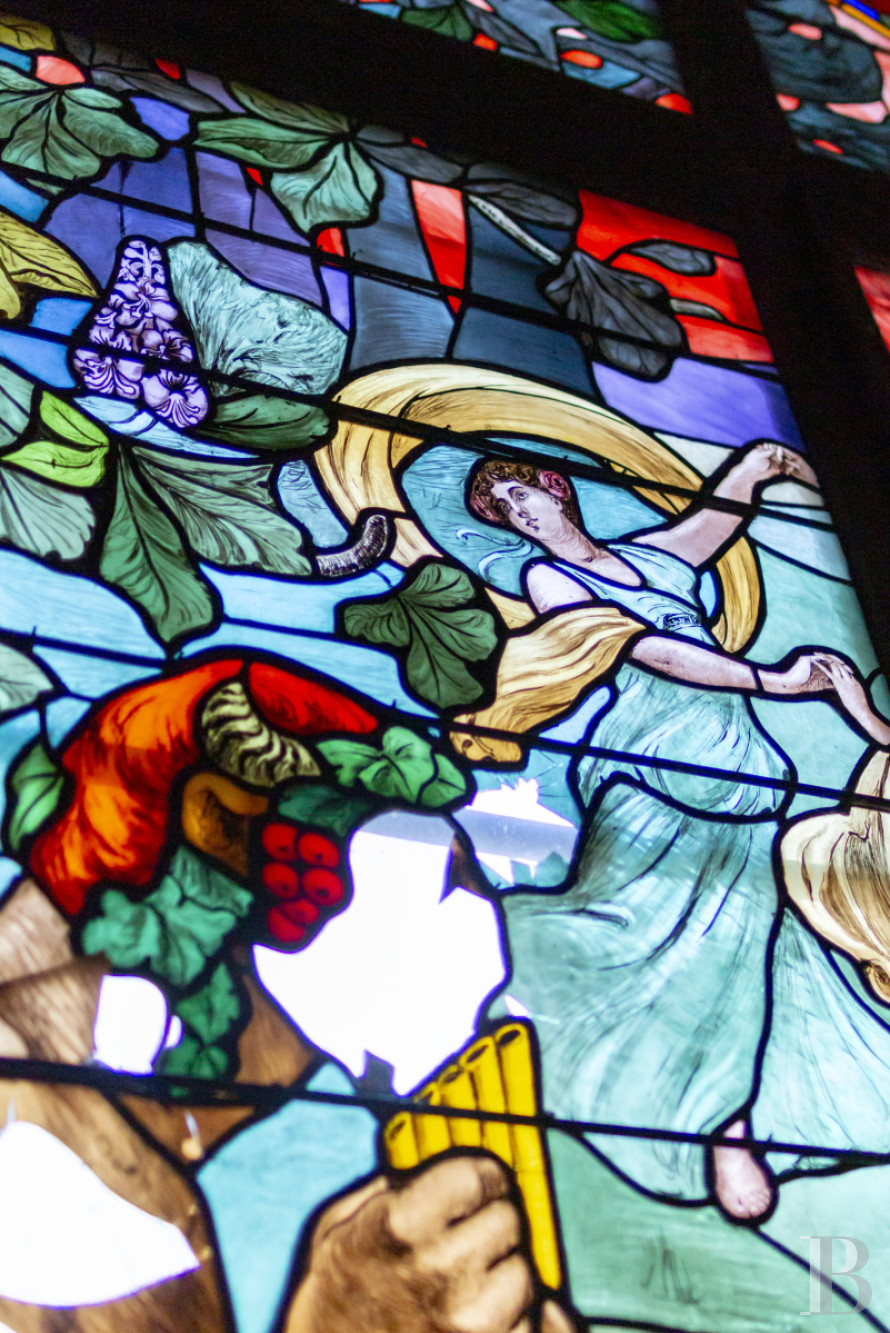
The entrance porch opens into a vast hall with a mosaic floor. The grand staircase, which starts here and leads up, is built of stone and flanked by a wrought-iron banister; it is lit by an exceptional stained-glass window created by master glassmaker Thomas de Valence, based on a work by the artist Louis Ollier. The walls are decorated with naturalistic paintings by Guillermain and Mangier, artists from Lyon. An elevator shaft had even been planned, to the left of the staircase. Located on the right-hand side of the chateau, the state rooms were also adorned by these painters in various hues, lending the building a Renaissance feel. Versailles parquet distinguishes the grand salon, dominated by shades of red and yellow, as well as the small salon, in pink and green, whilst the wooden planks are laid in a herringbone pattern in the billiard room, in shades of blue and light oak. Each room features a richly ornamented marble fireplace. To the left of the porch there is a dining room with a herringbone parquet floor and walls decorated with panelling and paintings, featuring a wooden trumeau fireplace, entirely carved and adorned with a still life. Adjacent to this is a pantry, followed by a kitchen with tiled floors and walls, equipped with an antique range.
The first floor
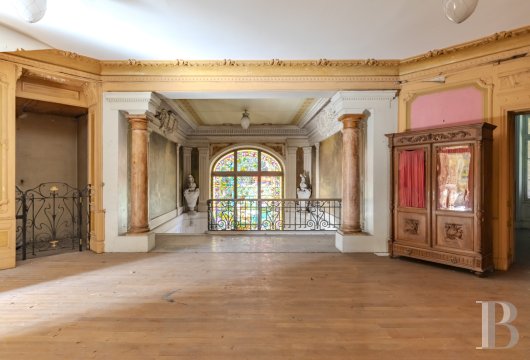
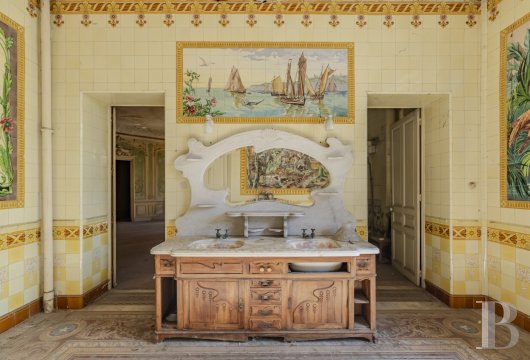
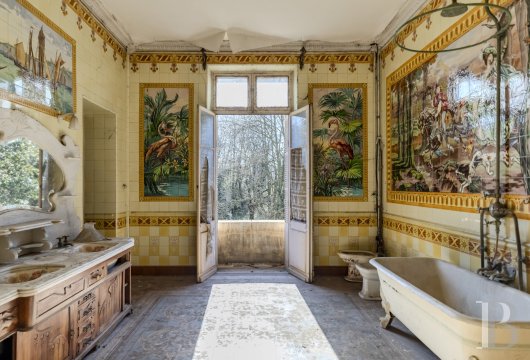
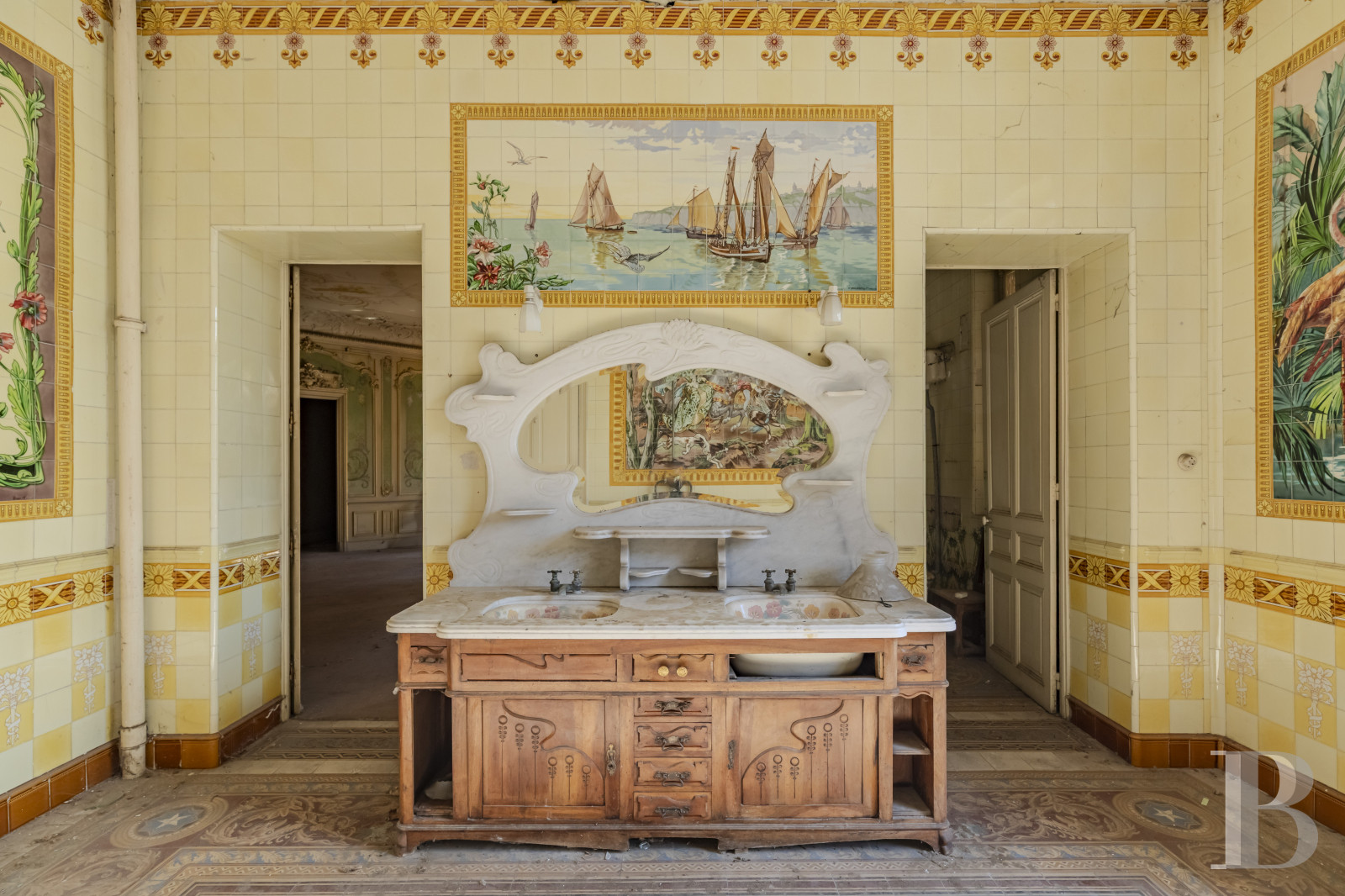
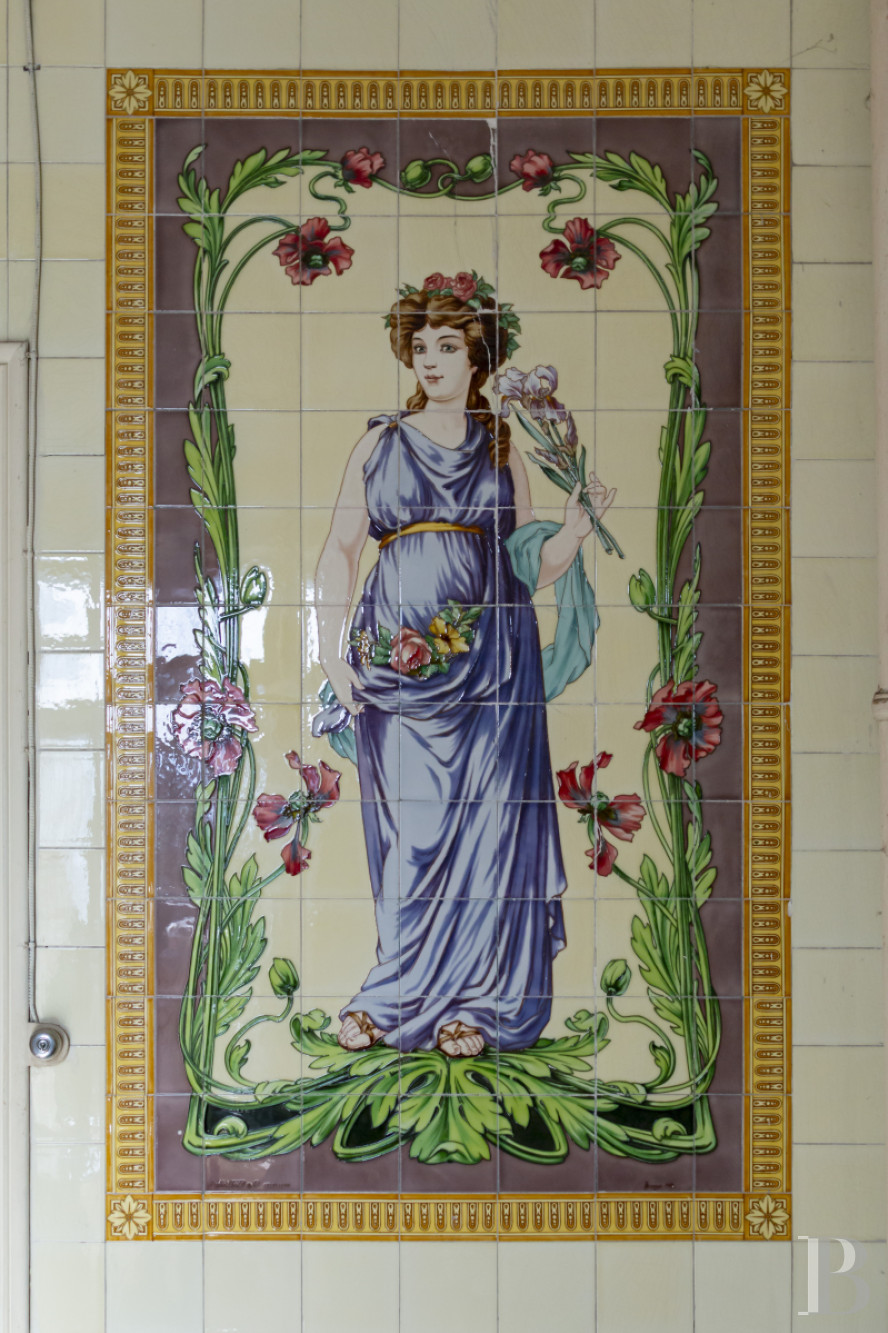
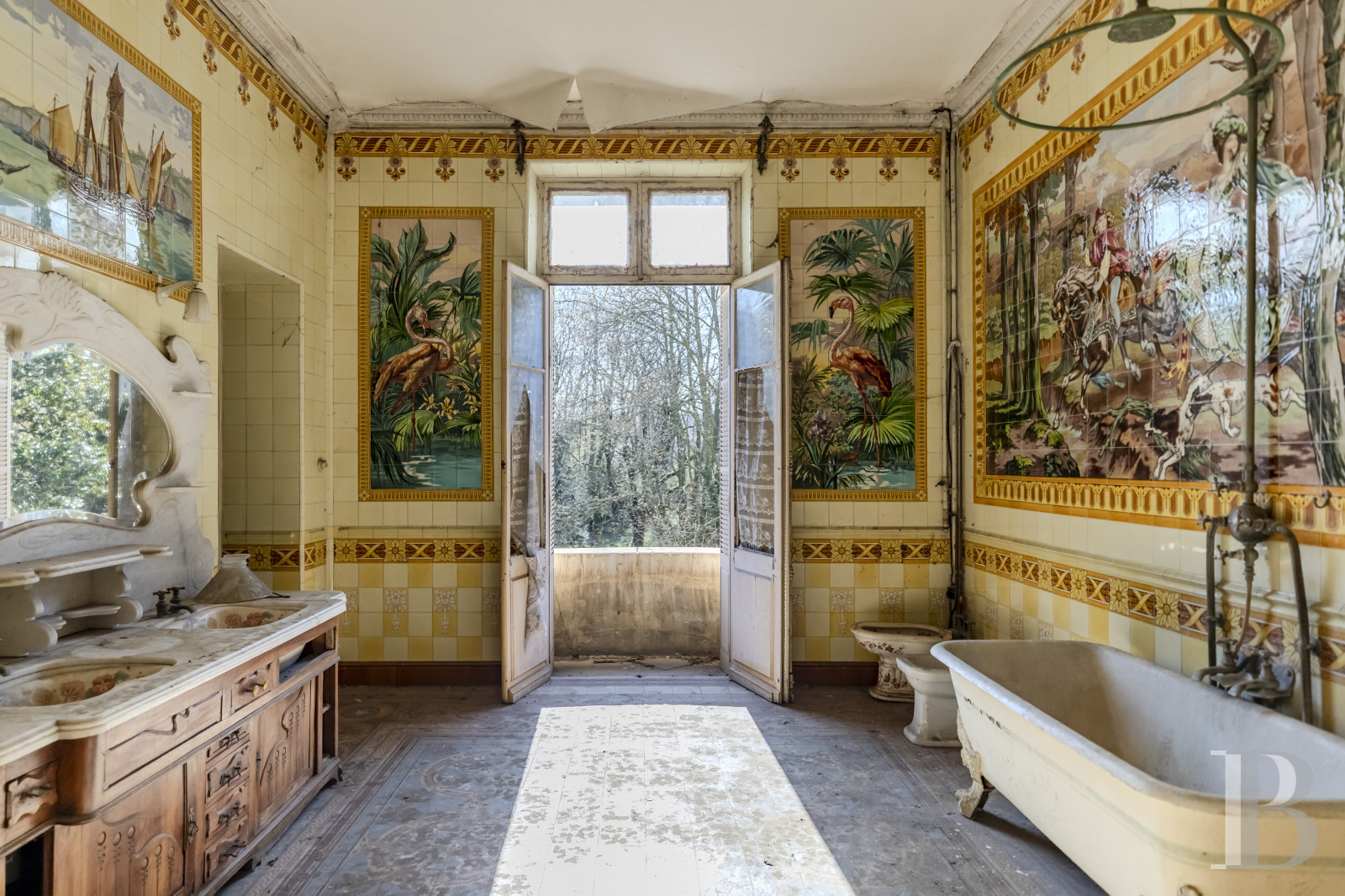
At the top of the grand staircase, a spacious hall leads to the bedrooms originally designed for the resident family. The largest, the lady’s bedroom, decorated in the Louis XVI style with finishes inspired by antiquity, is situated in the rotunda, above the grand salon. It has its own bathroom, the walls of which are covered with earthenware from the Hippolyte Boulenger factory in Choisy-le-Roi. The decor features hunting scenes, flamingos and female allegories. The floor is covered with tiles from the Paray-le-Monial factory. The master’s bedroom, smaller in size, is much simpler in its Henri II Neo-Renaissance style. It also has an en-suite bathroom. The other bedrooms, with a more understated appearance, are situated on either side of the hall, each with its own bathroom or shower room. The bedroom floors are covered with straight-laid fine-plank oak parquet, or herringbone parquet in the case of the master and mistress’s bedrooms.
The second floor
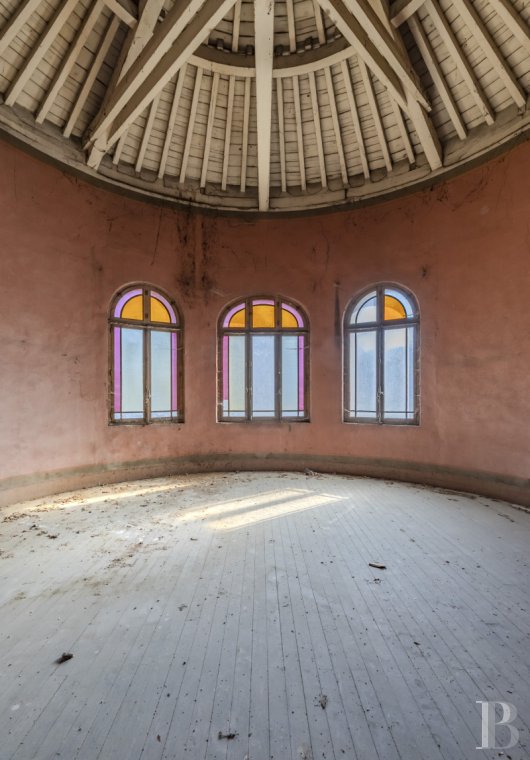
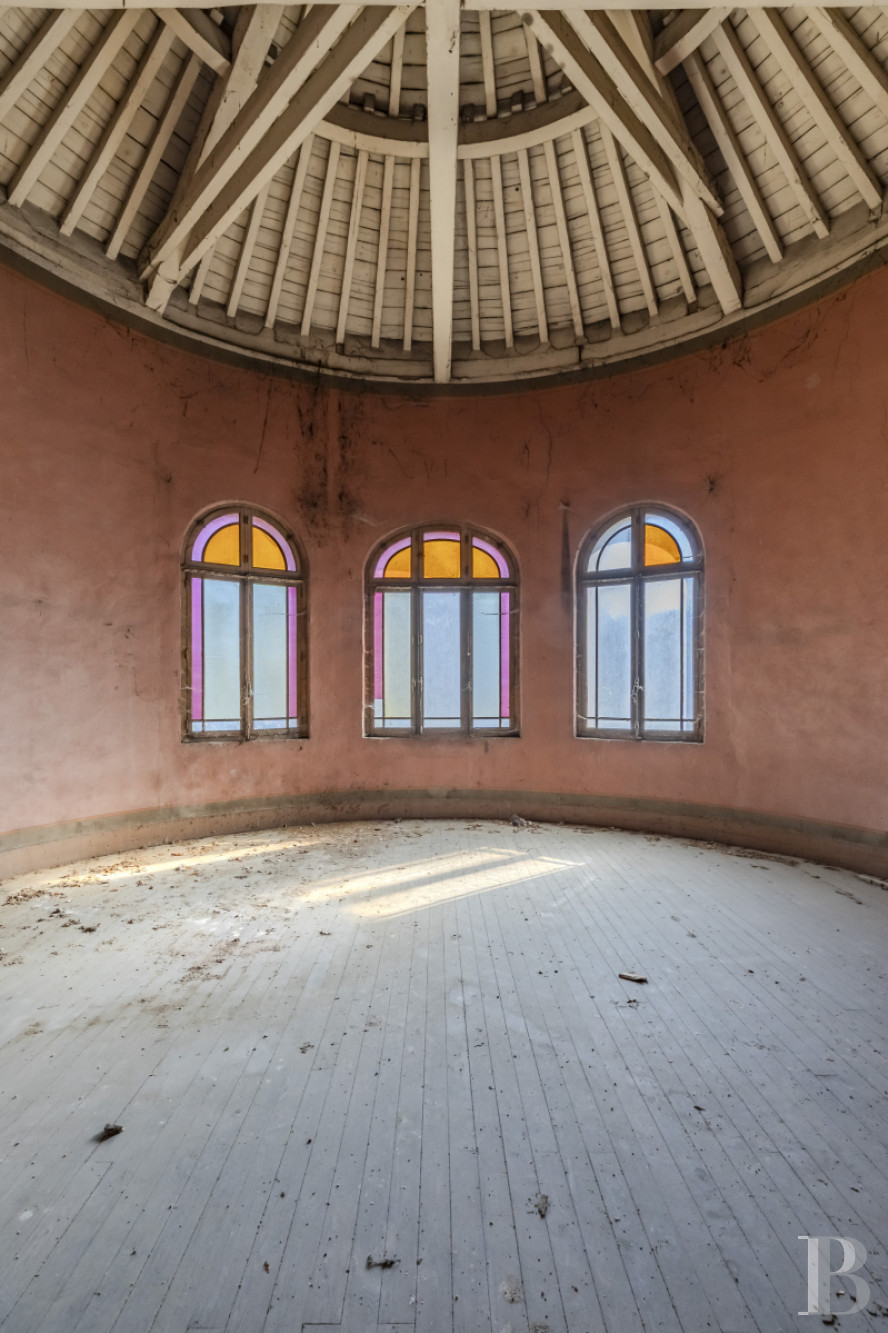
The top floor is accessed via the spiral service staircase located in a round tower at the rear of the building. It leads to the four staff bedrooms and the five attic rooms, one of which is larger, situated above the staircase, and could be converted. The corridor leading to these various spaces then leads to a vast rotunda with a panoramic view of the grounds and the town. Patio doors provide access to small terraces on either side of the room. The floors here, too, are covered with straight-grained parquet, and the roof structure, which is in good condition, is visible only in the attics.
The caretaker's house
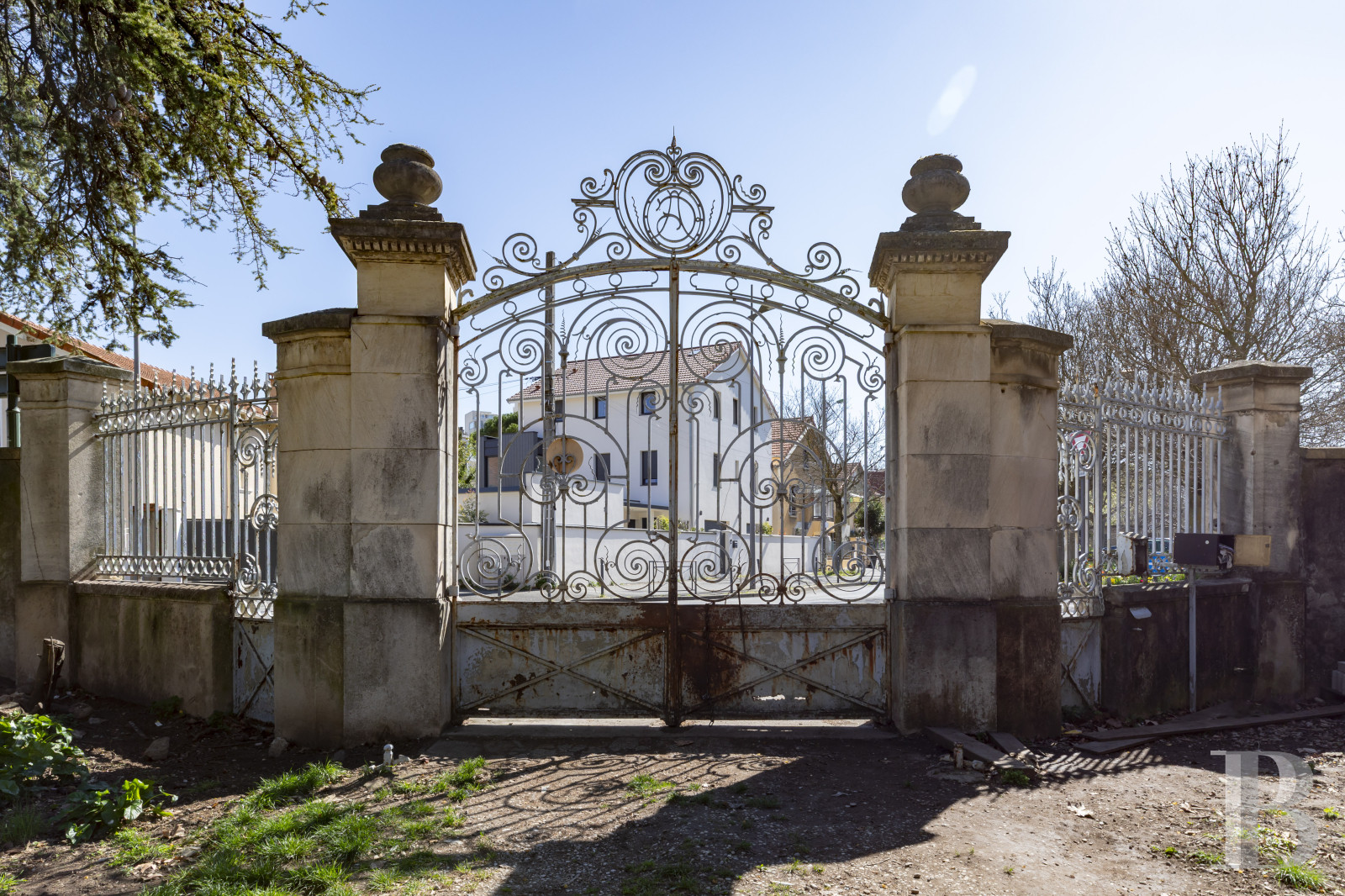
As its name suggests, the building was constructed at the entrance to the estate to ensure its surveillance. It has a separate entrance and features simple, rendered stone facades beneath a hipped roof of flat interlocking tiles. With a floor area of nearly 125 m², it comprises a basement with a cellar, a ground floor with a kitchen and a living room, and a first floor with two bedrooms, a bathroom and a study. Works to finish it are required.
The former hydroelectric power station
Built between 1900 and 1904 like the other buildings, the power station, situated some distance from the residential buildings, was part of an innovative project aimed at supplying all the electrical energy required for the estate. It operated using water from the Épervière stream, which also fed canals and a series of ponds in the landscaped grounds. The power station is now unusable and could therefore be converted into residential accommodation or into premises for hosting receptions or seminars. Behind its rendered stone facades and flat interlocking tile roof lie a hall and a vast room with exposed timber framing. The finishes require renovation and structural work may be necessary depending on the building’s intended use.
The grounds, river and dovecote
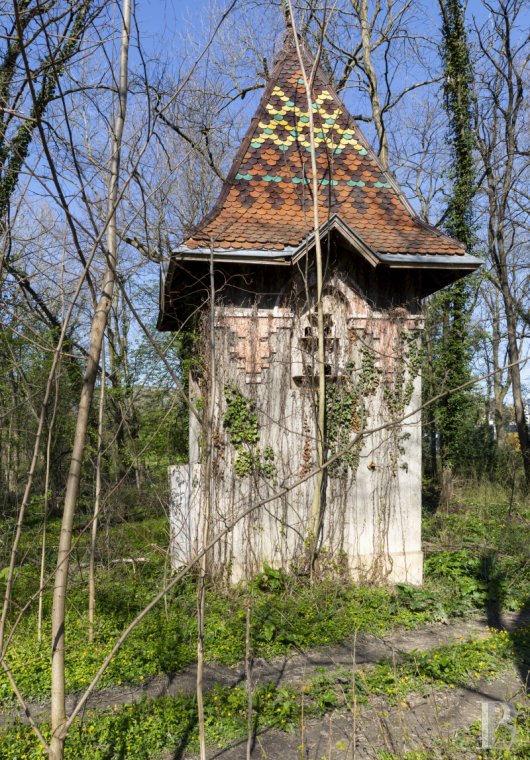
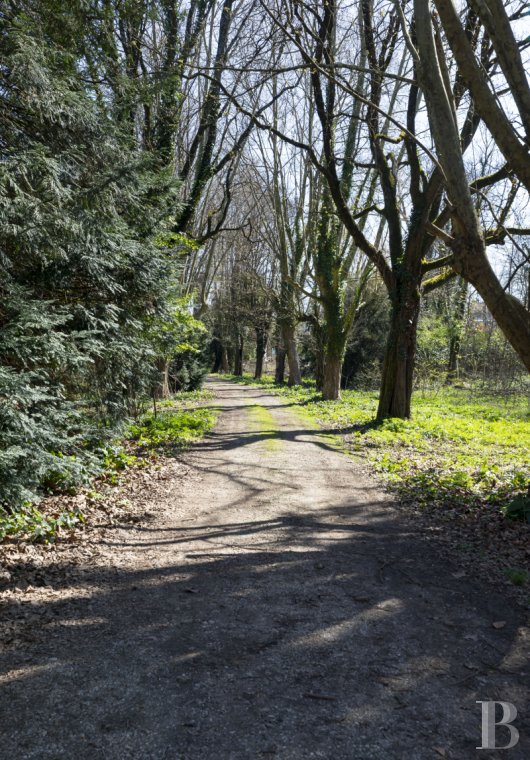
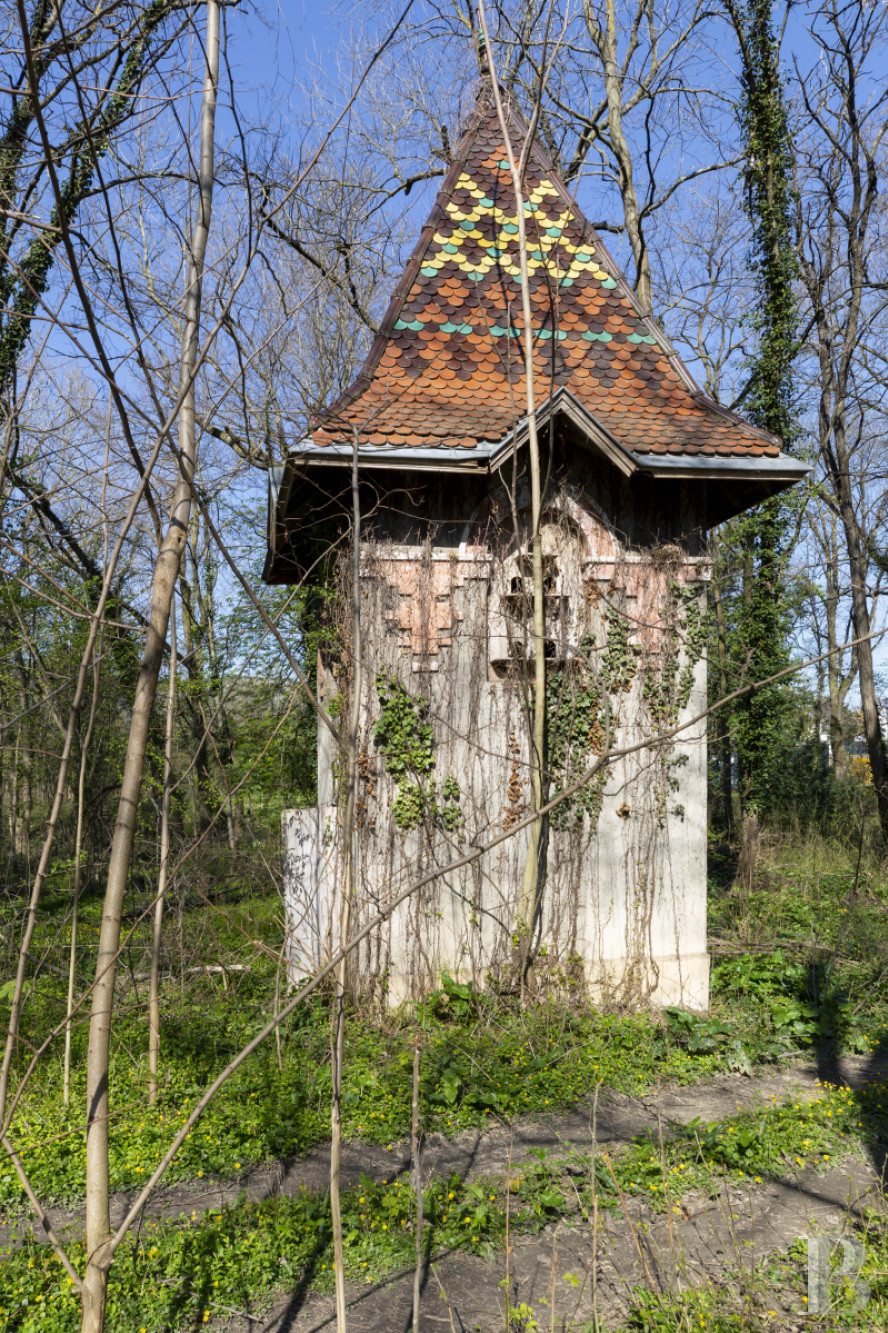
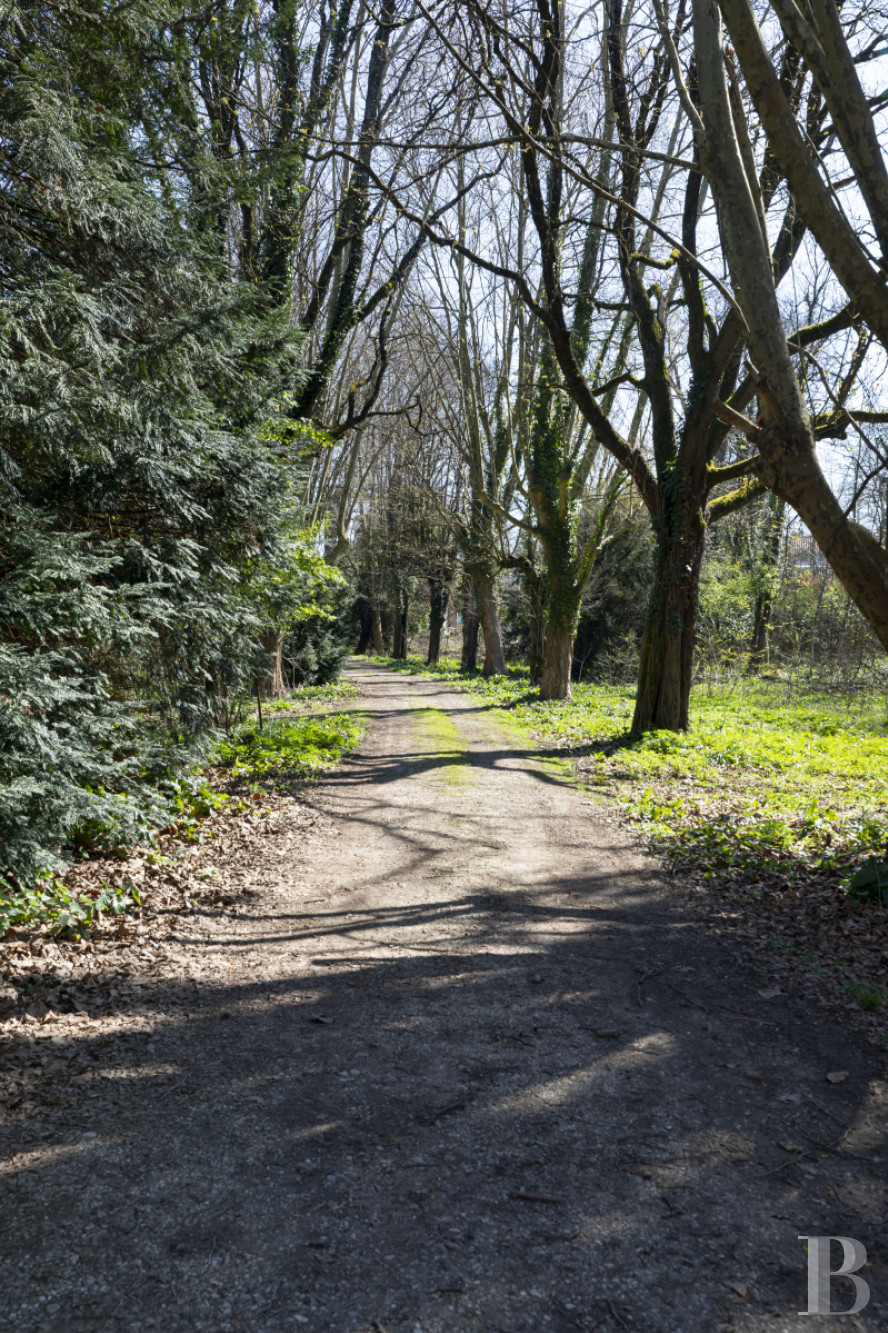
The extensive grounds are planted with a rich variety of trees and shrubs, including lime trees, magnolias and other species, some of which are over a century old. Its design was entrusted to the landscape architects Luizet and Barret. Unfortunately, the grounds have not been maintained, and nature has gradually reclaimed its rights. An avenue of plane trees was laid out to lead visitors from the gate to the entrance of the chateau. Two large greenhouses were originally heated. They were damaged during Second World War bombings and were not rebuilt. Hydraulic systems were used to capture the ground’s springs and utilise them for watering, amongst other purposes. Not far from the springs, near the old hydroelectric power station, there is a small dovecote with stone and brick walls, a glazed-tile hipped roof with eaves, as well as an old wash house.
Our opinion
A sumptuous residence built at the dawn of the 20th century for a family of wealthy industrialists, surrounded by 4 hectares of grounds rich in vegetation and features, in the heart of the town. Although it requires interior and exterior restoration to regain its former splendour and open it up to new uses, the property—well known to the people of Valence, who have ennobled it with the name “Le Château de Valence”—is brimming with decorative gems and architectural features typical of Art Nouveau. Whilst a family could once again occupy its many rooms, a hospitality professional would find ample scope for a major project, particularly as a feasibility study has been carried out to transform the building into a luxury hotel. A planning application has, in fact, been submitted to this end and, as it is a listed building, a substantial grant has been secured by the current owner.
1 725 680 €
Including negotiation fees
1 628 000 € Excluding negotiation fees
6%
incl. VAT to be paid by the buyer
Reference 302261
| Main building floor area | 1485 m² |
| Land registry surface area | 4 ha 31 a |
Information on the risks to which this property is exposed is available on the website: www.georisques.gouv.fr
Share


NB: The above information is not only the result of our visit to the property; it is also based on information provided by the current owner. It is by no means comprehensive or strictly accurate especially where surface areas and construction dates are concerned. We cannot, therefore, be held liable for any misrepresentation.