



A 19th-century chateau converted into an artists' residence
in 2 hectares of wooded grounds, near Château-Thierry
in 2 hectares of wooded grounds, near Château-Thierry
Château-Thierry,
AISNE
picardy
02400
FR


Location
6 km from Château-Thierry, in the Marne Valley, the property is located in a rural commune in southern Aisne, distinguished by its church, a listed historical monument since 1922, and by its tranquillity. The surrounding area features a rolling landscape of fields and vineyards, typical of the Champagne region. Agricultural plots alternate with woods and charming villages. Nearby, Château-Thierry, the birthplace of Jean de La Fontaine, is known for its historic town centre and the remains of its medieval castle overlooking the valley. It offers all the services, shops, schools, and cultural facilities necessary for daily life. The train station provides access to Paris in 55 minutes via the Paris-Est line. The capital is approximately 96 km away by road, and Reims is 60 km away.
Description
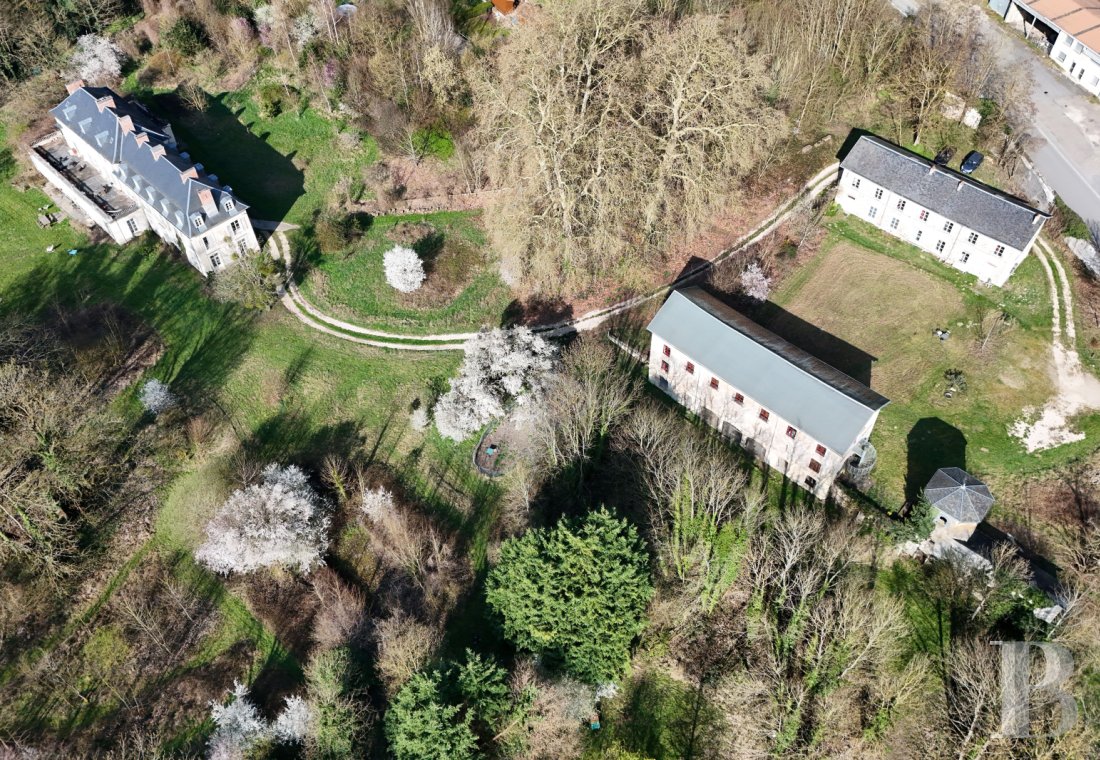
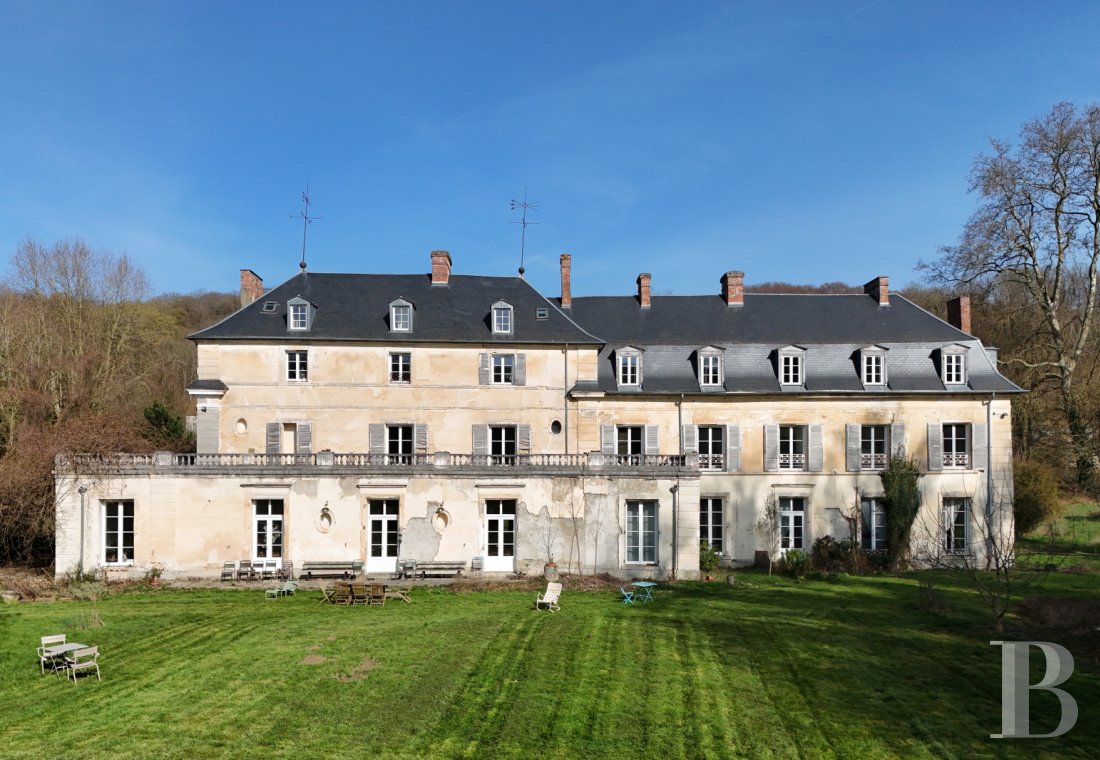
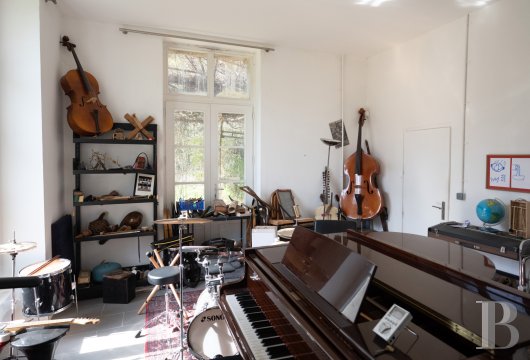
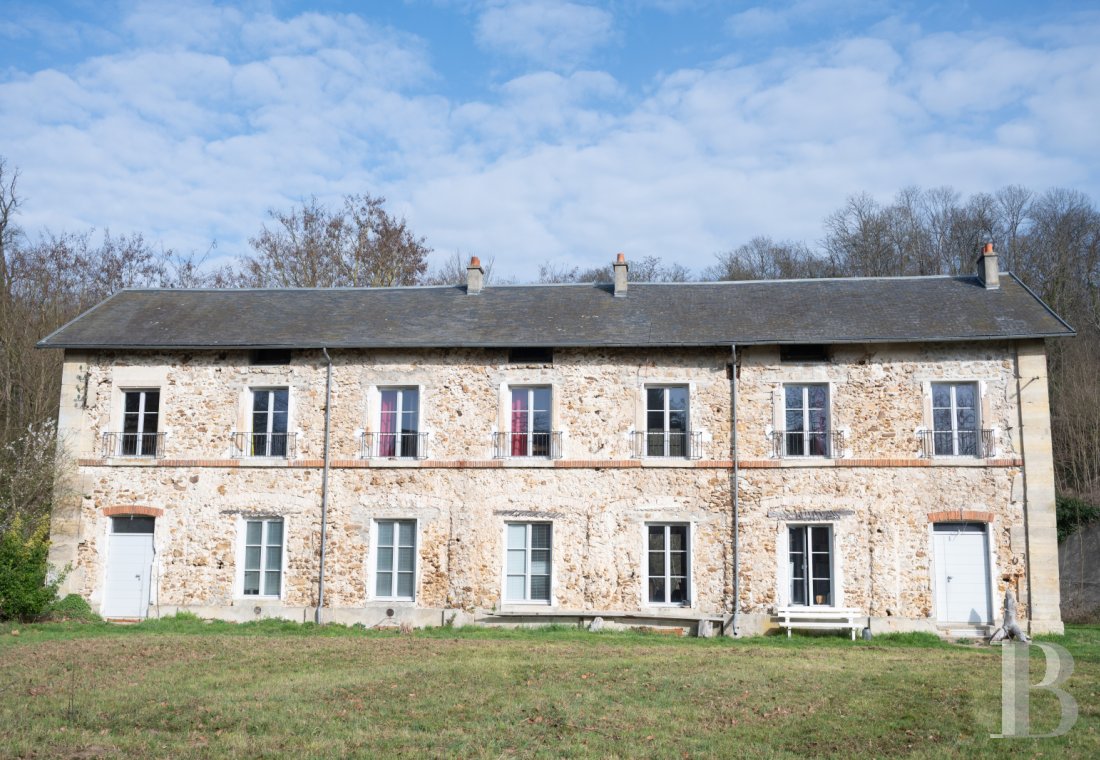
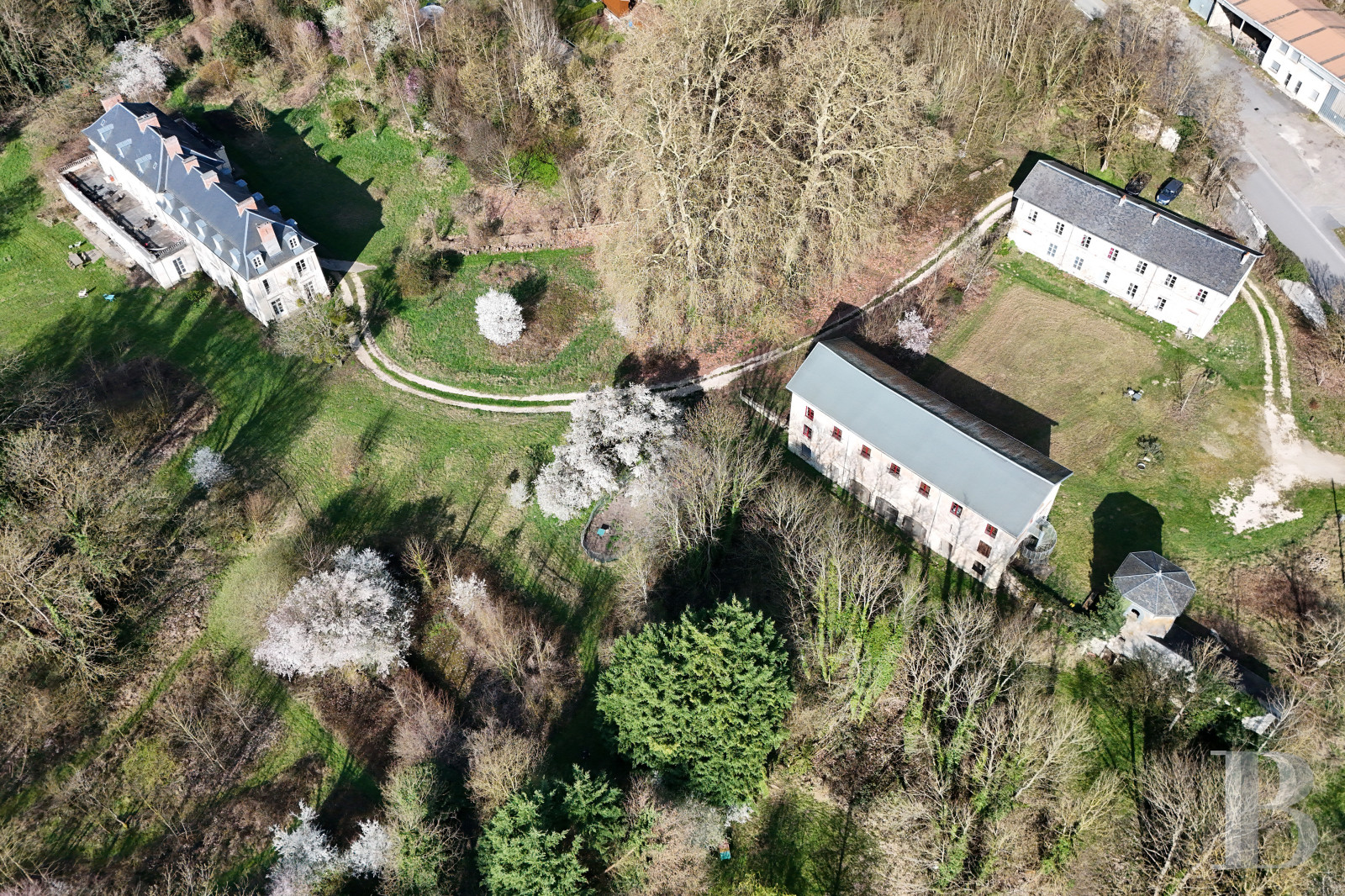
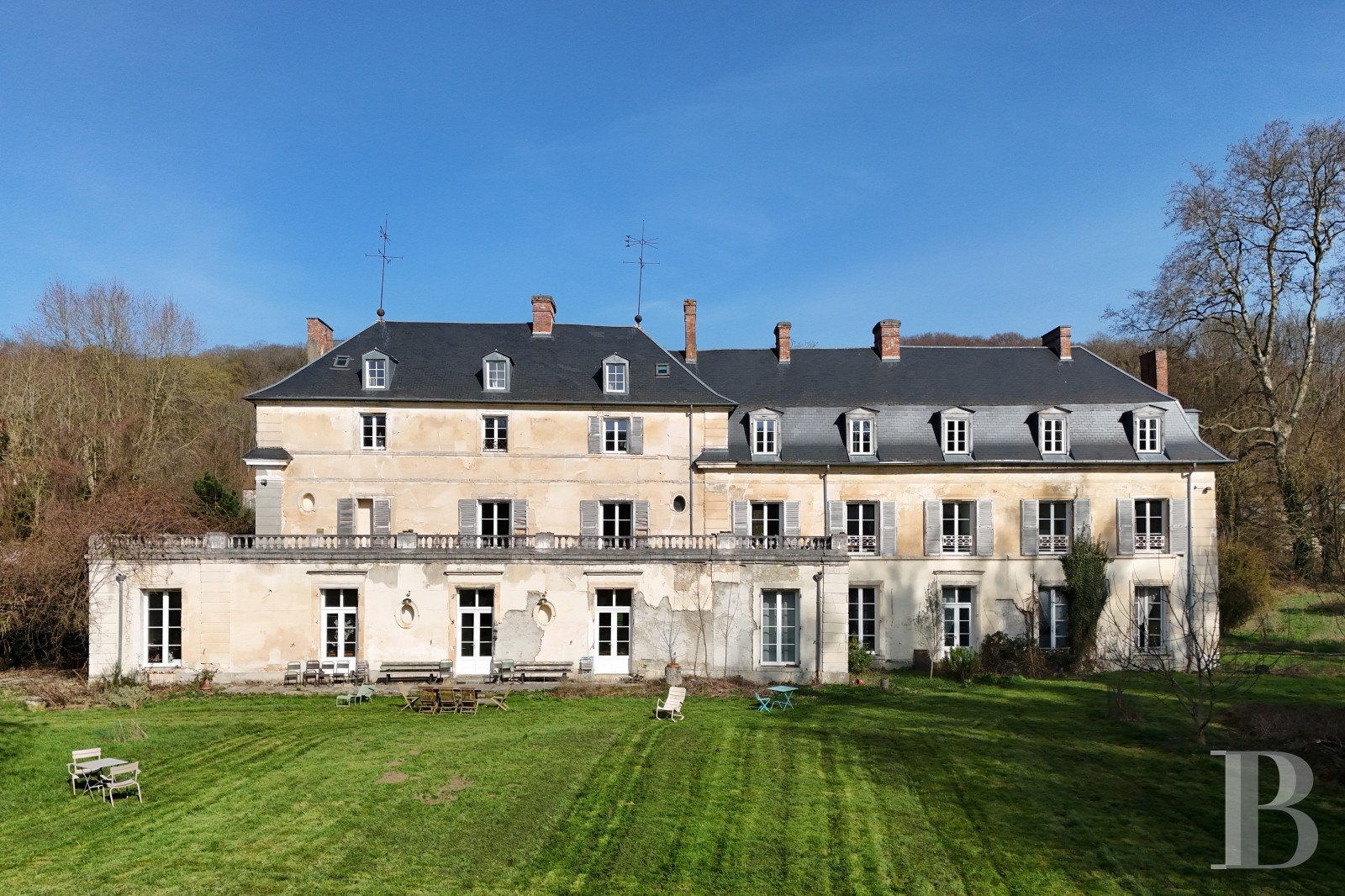
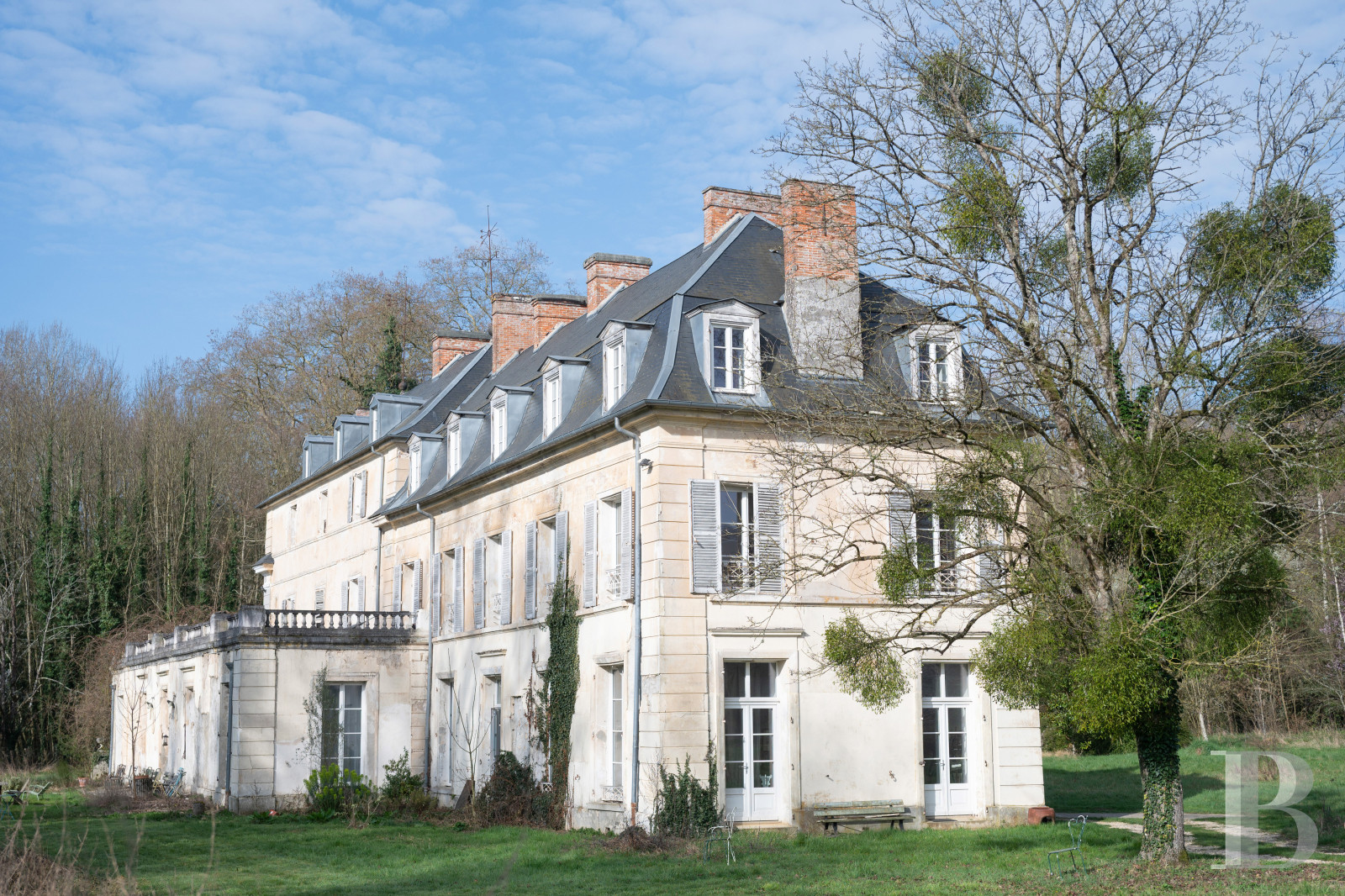
Rebuilt in the 19th century. Built on the site of a 14th-century castle, the three-story building is topped with a mansard slate roof punctuated by dormer windows. The long, light-coloured stucco facade is enlivened by a projecting extension, forming a distinct volume crowned by a stone terrace framed by a balustrade. Tall, evenly spaced windows complete the composition. A short distance from the chateau, two barns facing each other fashion an open, grassy courtyard, near a dovecote and a dog kennel. The property, including its two outbuildings, offers approximately 1,750 m2 of living space and occupies nearly 2 hectares of grounds. The estate currently serves as an artists' residence, a teaching facility, and an event venue.
The chateau
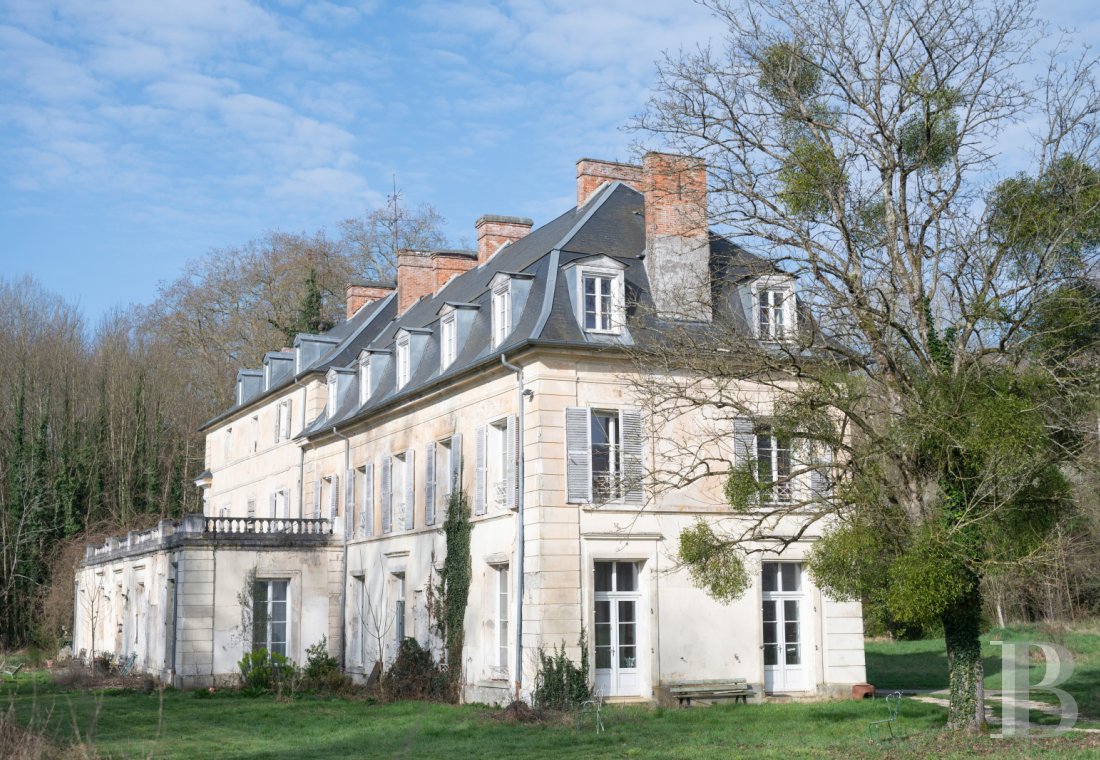
It appears at the end of a driveway surrounded by nature. Its size and vast slate roof, as well as in its numerous windows make it rather imposing. It presents itself as a classic chateau built according to the aesthetic principles of the 18th century, but which was heavily remodelled in the 19th century. One unusual feature distinguishes it: its central section has only one wing, the other having been destroyed during the First World War by dynamiting carried out by the German army.
The ground floor
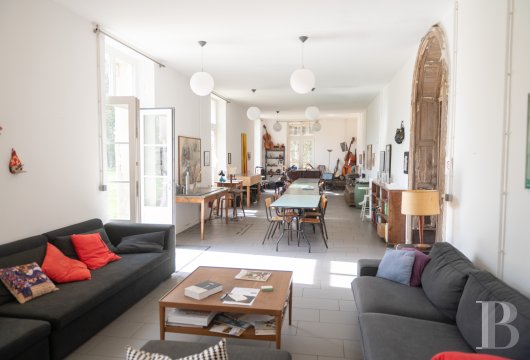
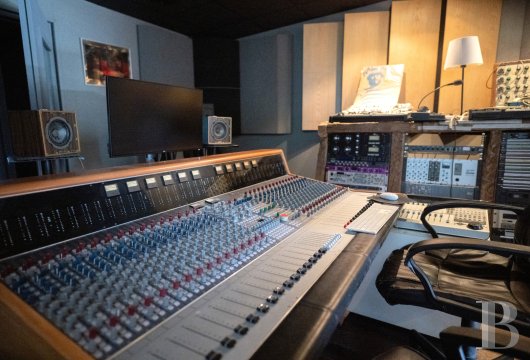
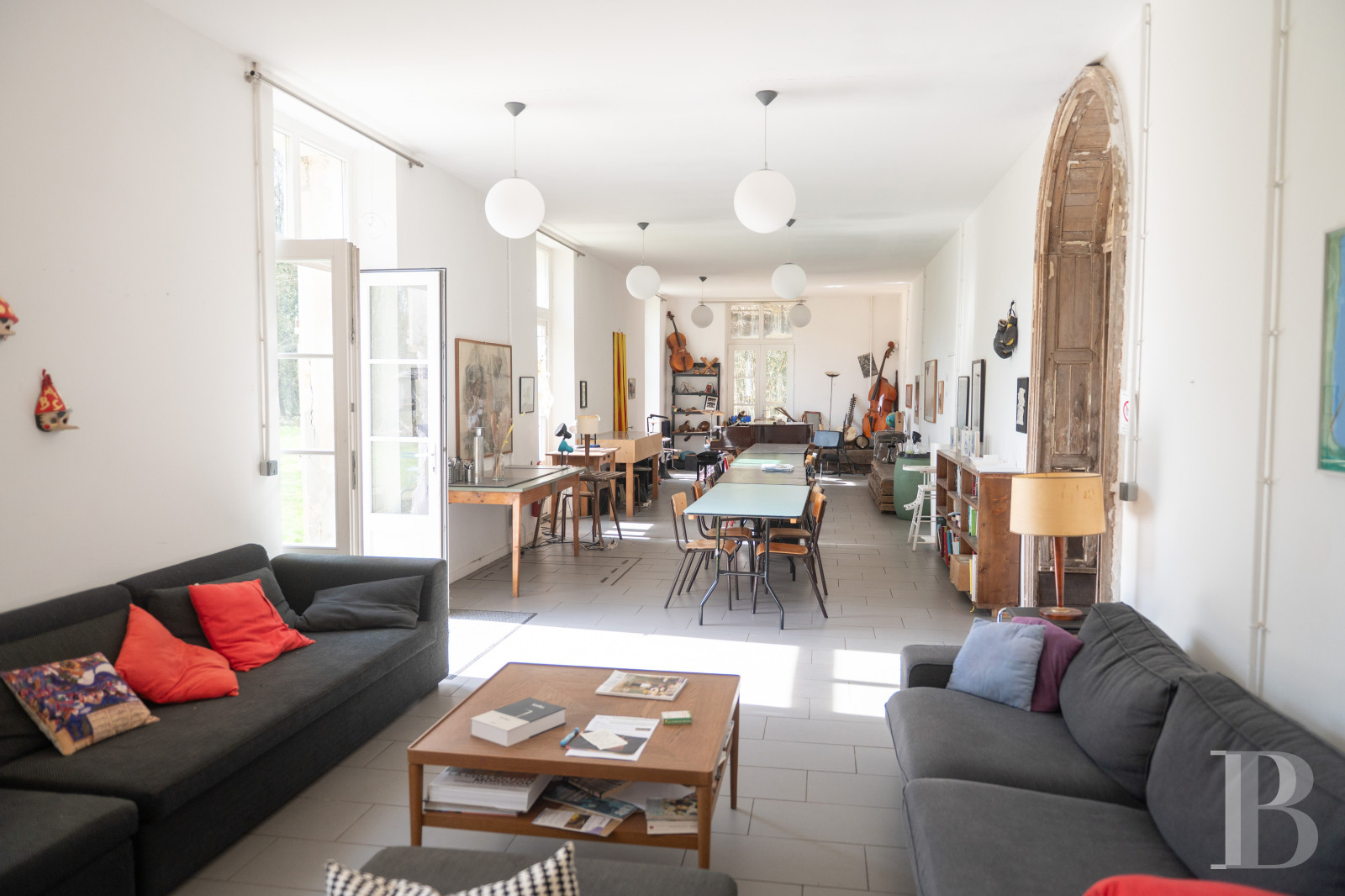
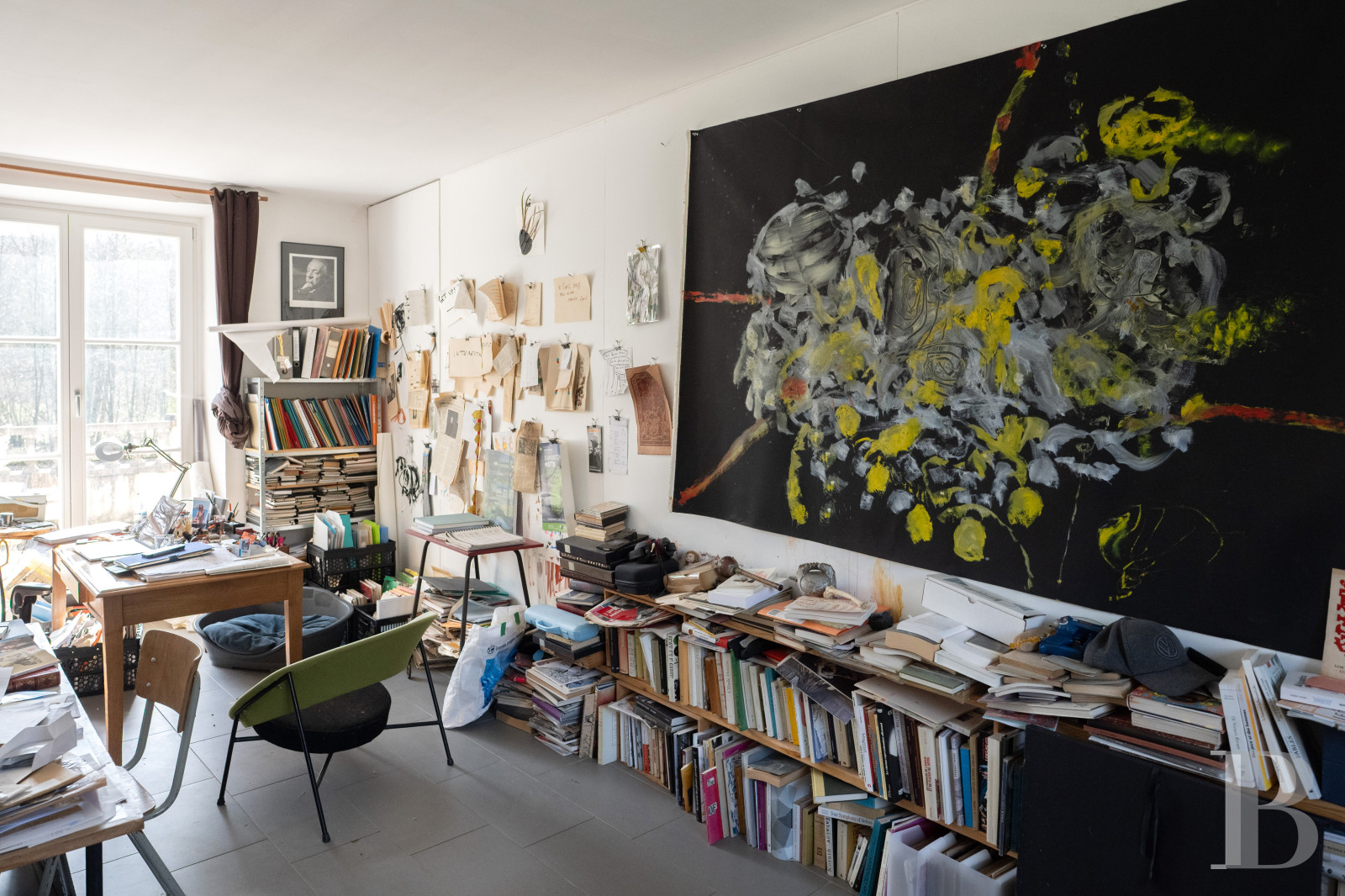
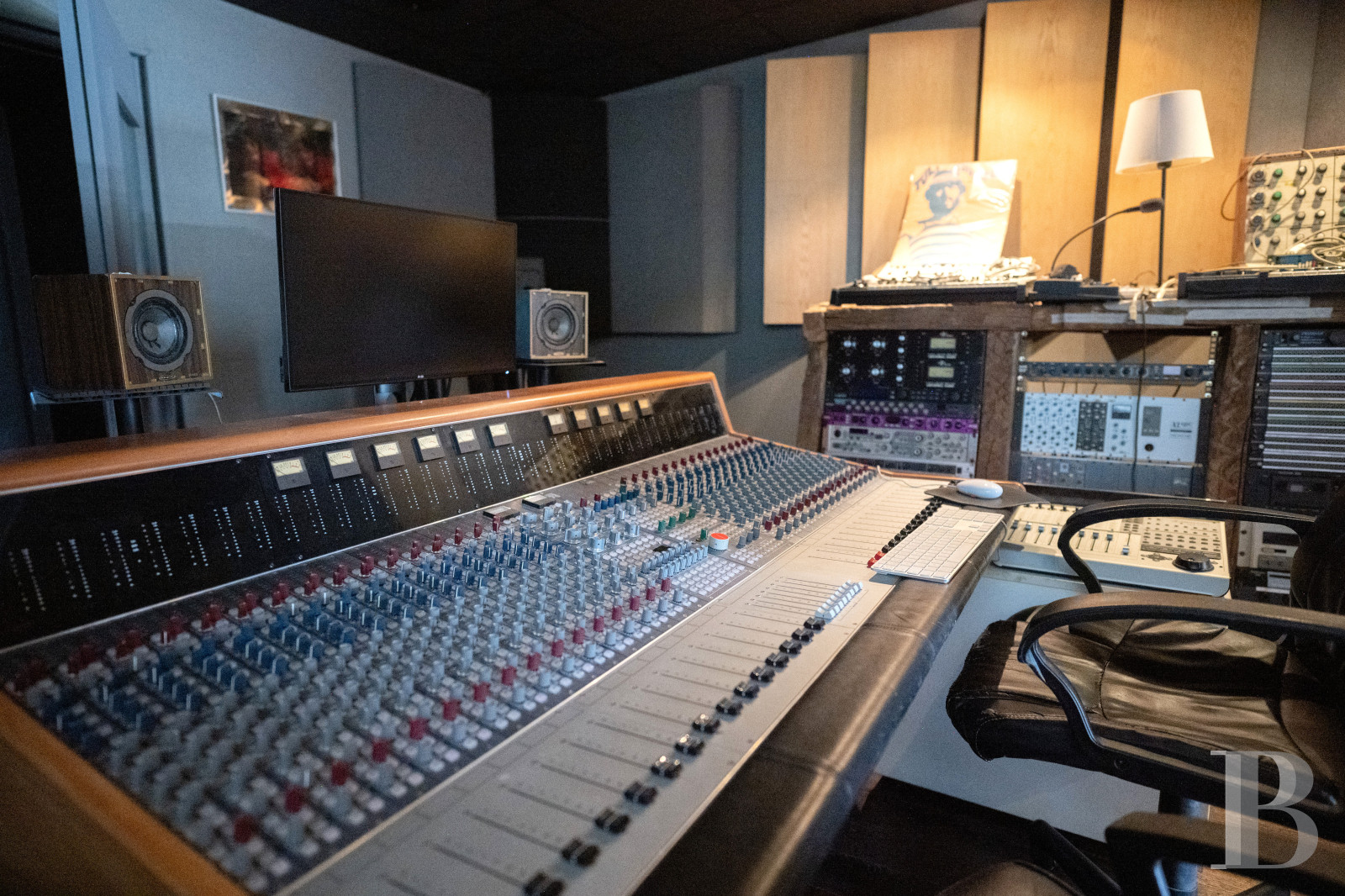
One of the chateau entries is through a fitted kitchen that occupies the entire width of the building and opens onto the grounds. To the right, a landing leads to the former grand staircase and a recording studio, adjacent to the boiler room and the pellet storage area. A very large reception room extends to the left, equipped with a projection system. Opposite the entrance, from the kitchen, a tall arched doorway opens onto a spacious room located beneath the terrace. At the far end of this room there are a second staircase and an office, which overlooks the garden. This bright room leads to a bedroom with an en-suite bathroom. There is also a toilet on this level, and the floors are tiled and heated.
The first floor
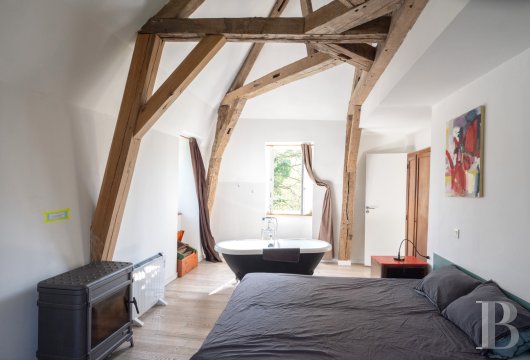
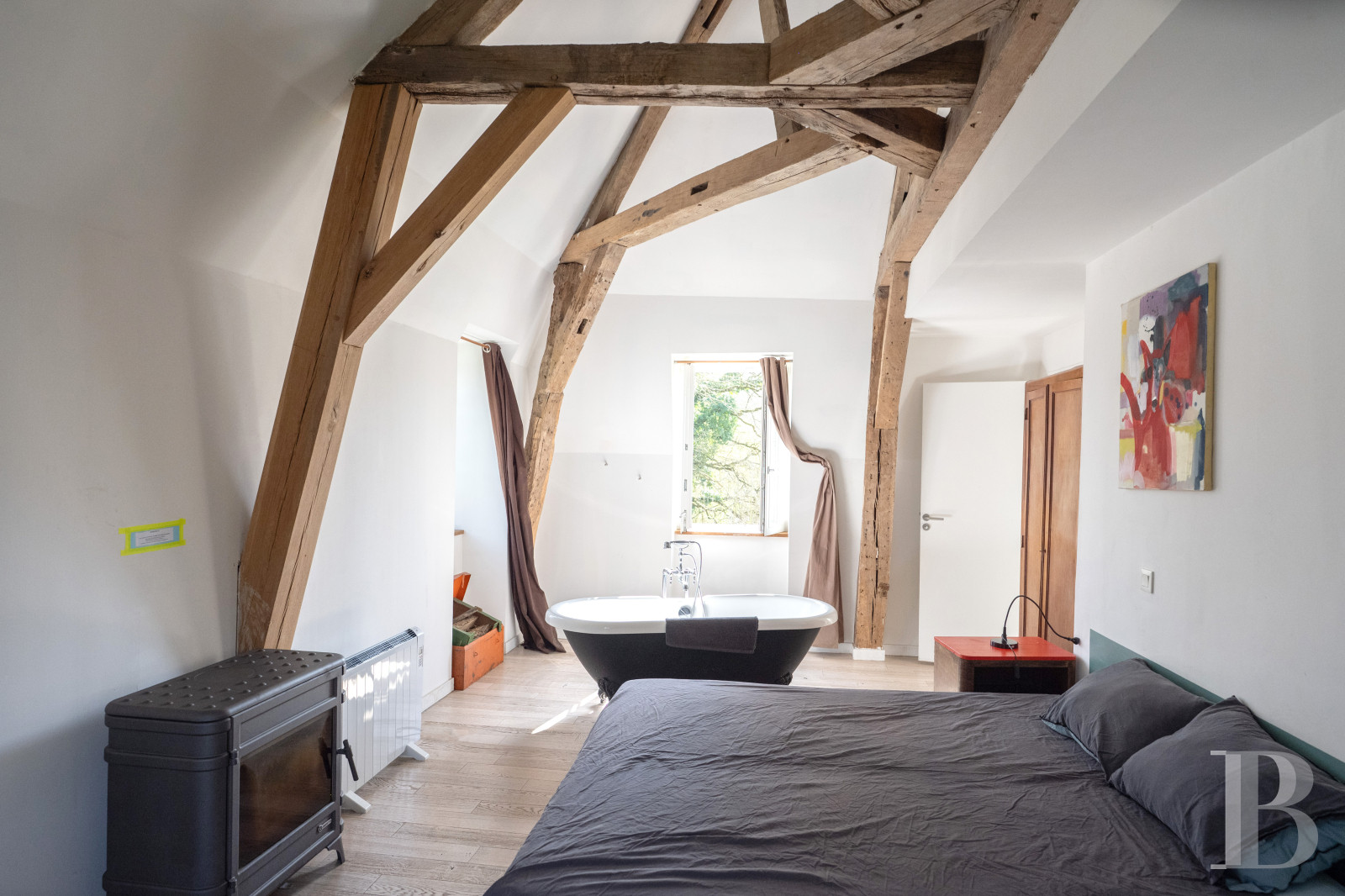
On the side of the staircase near the office, at the top of the stairs, a landing lit by a window leads to a bedroom with exposed beams. There is a bathtub in the room, and a bathroom extends on from it. On the other side, a corridor leads to a bedroom with exposed beams, then another smaller bedroom and a shower room. On the side of the main staircase there is a landing which leads via a small corridor behind a door, to a first bedroom with an adjoining bathroom. Beyond this there is a through bedroom that occupies the entire width of the building, lit by a window on each side. It includes an office, a storage area, and a shower room. Each level has two separate entrances, connected by doors.
The attic
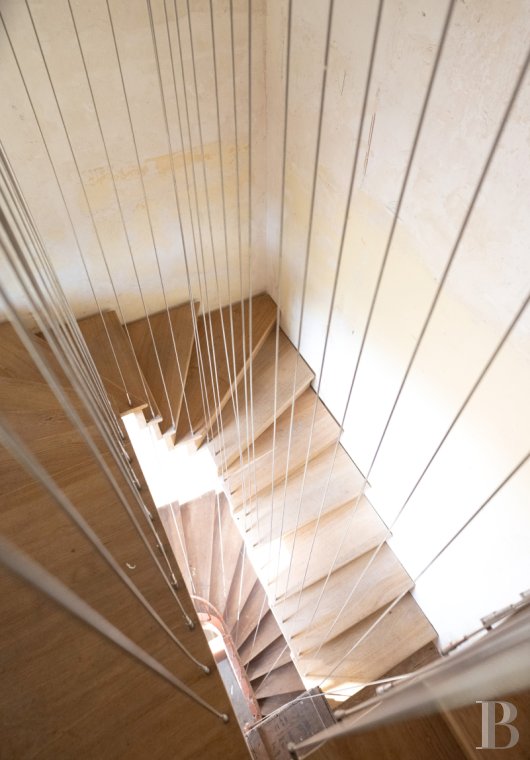
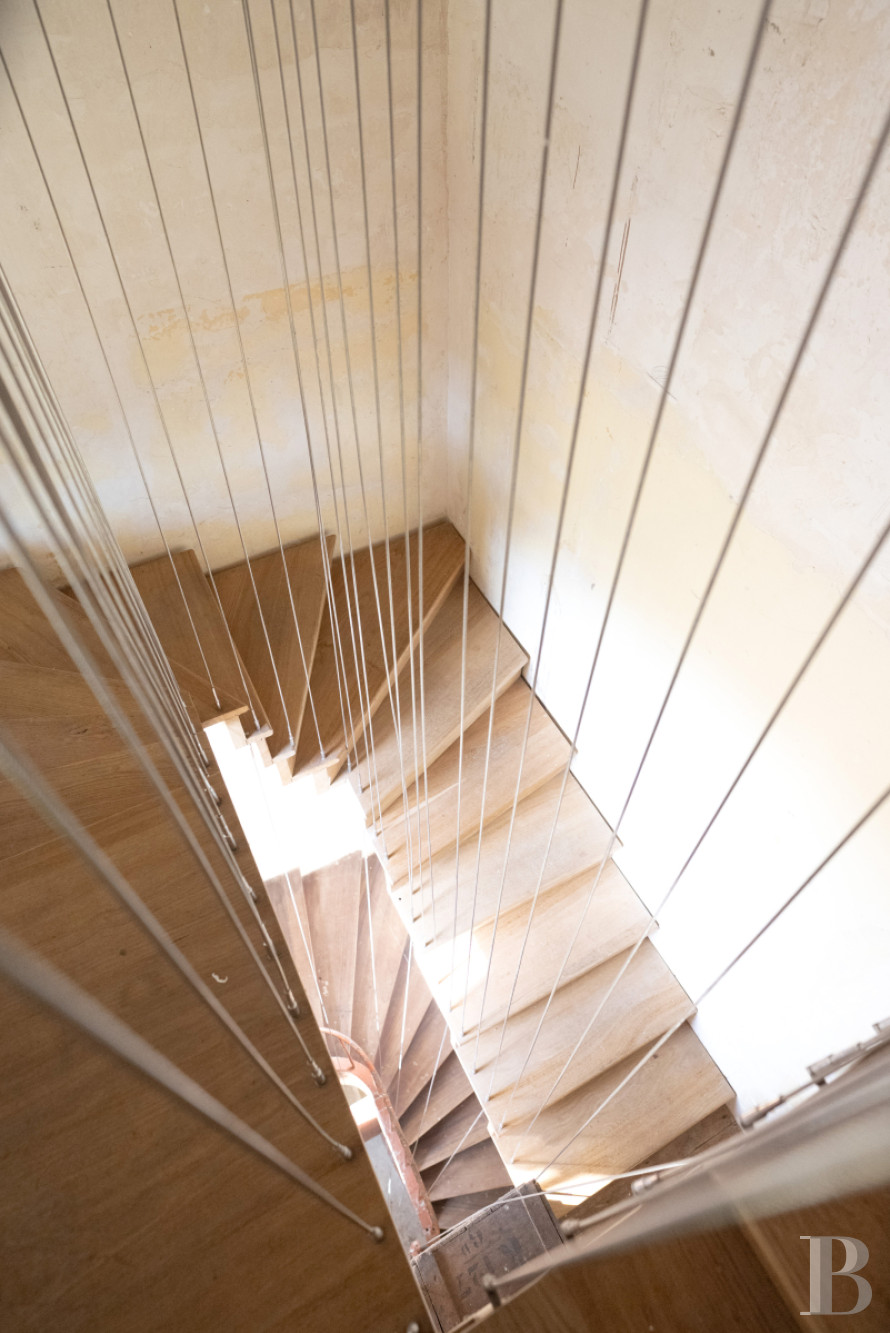
The main staircase is extended on the left by a small staircase concealed behind a door which leads up to the second floor. This leads to a hallway under the eaves, which provides access to three bedrooms and a bathroom. The spaces are adapted to the slope of the roof. The floors are covered with original parquet flooring. Approximately half of the attic space is currently converted, while the other half offers numerous possibilities.
The outbuildings
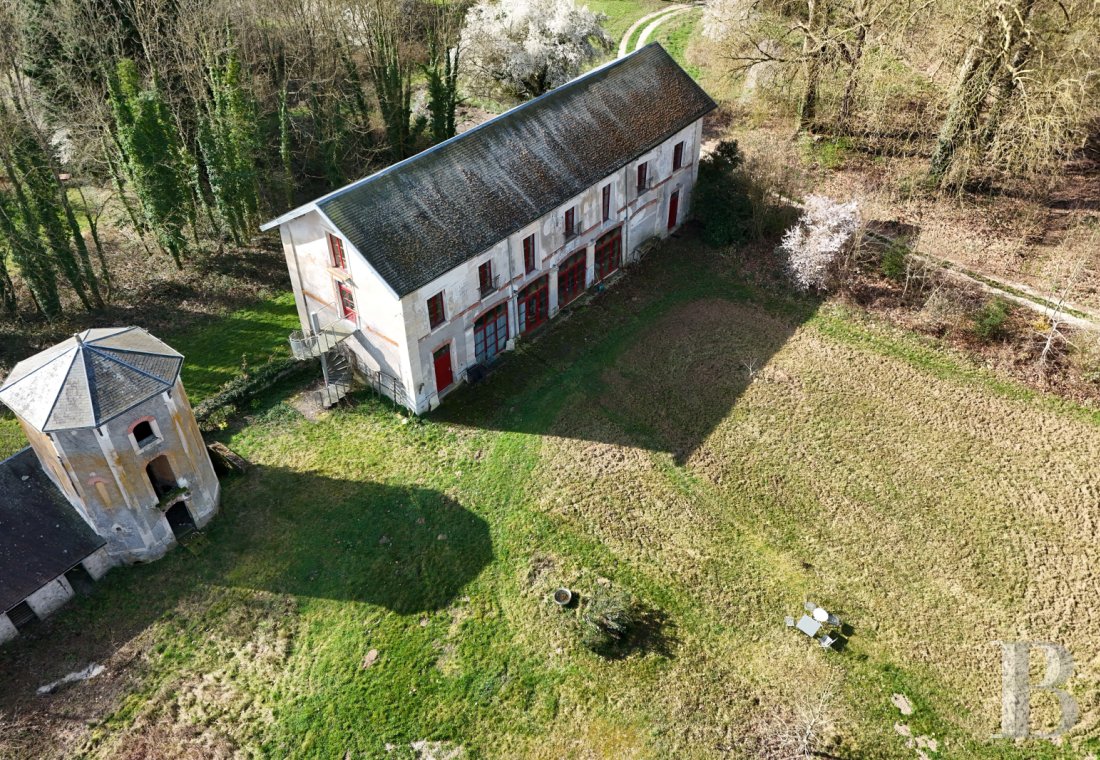
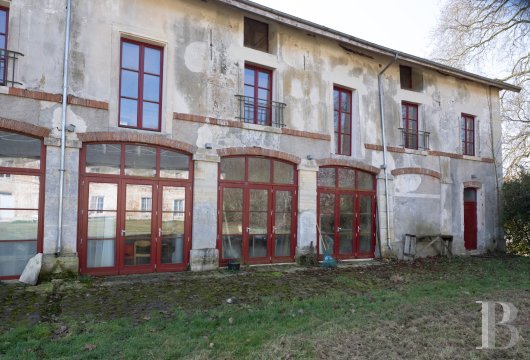
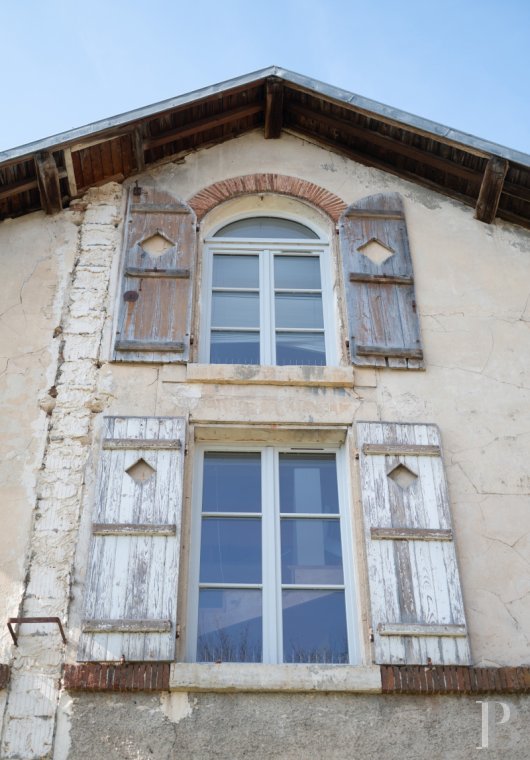
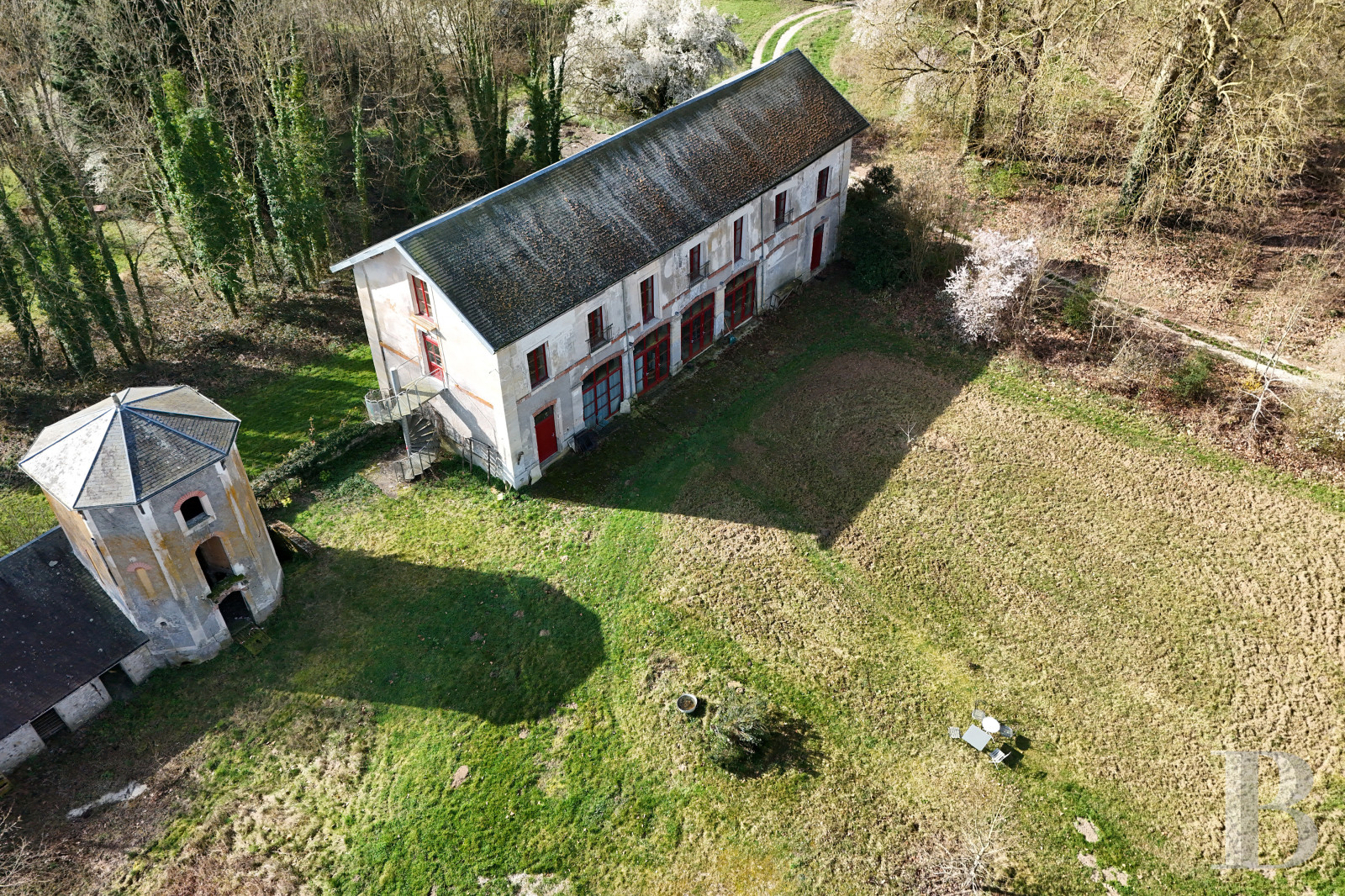
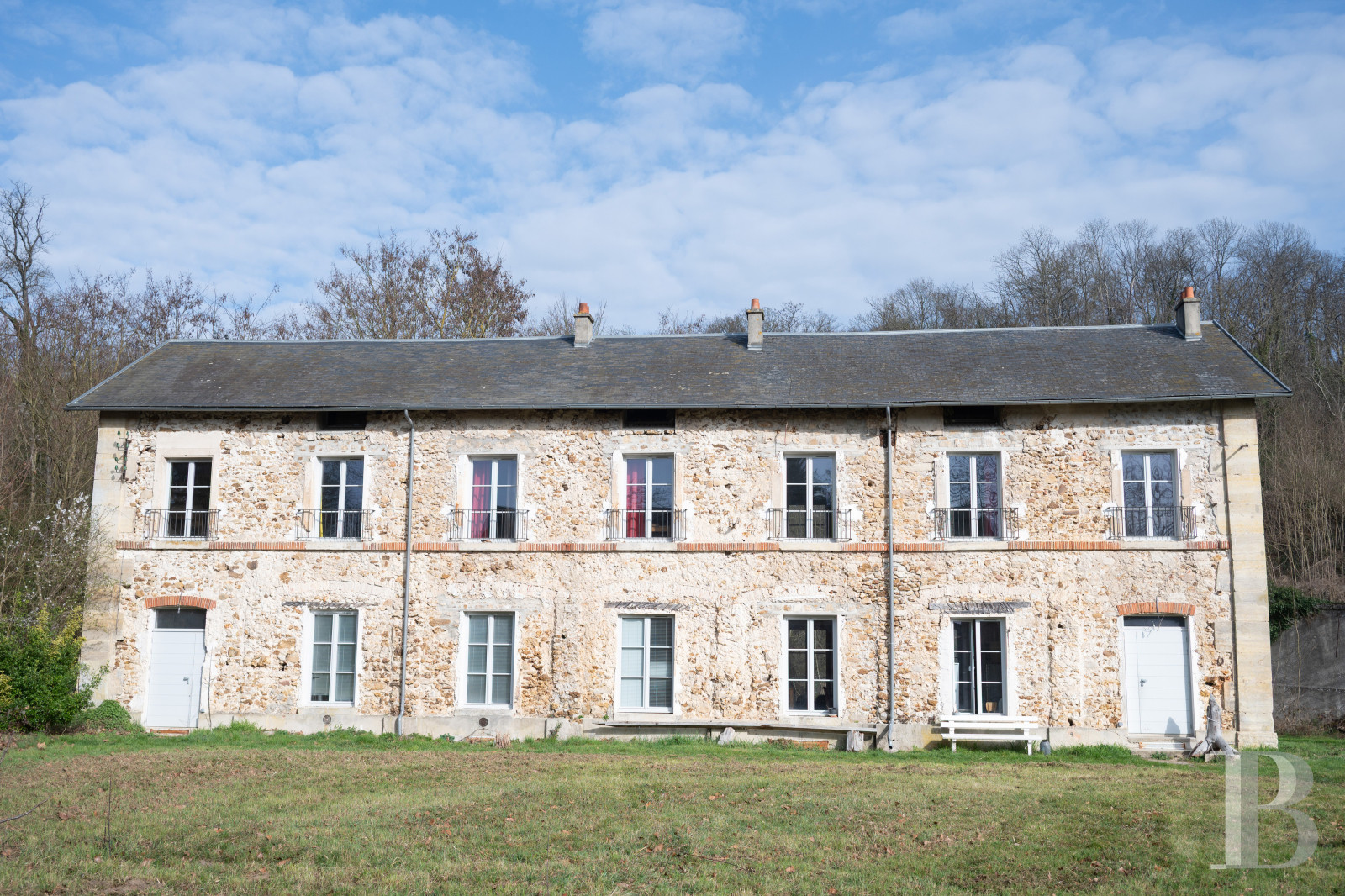
Two barns face each other and frame the courtyard. Built of rendered masonry, they reflect their former agricultural function, with large openings on the ground floor and a gabled roof. A large dovecote completes the buildings.
The first outbuilding
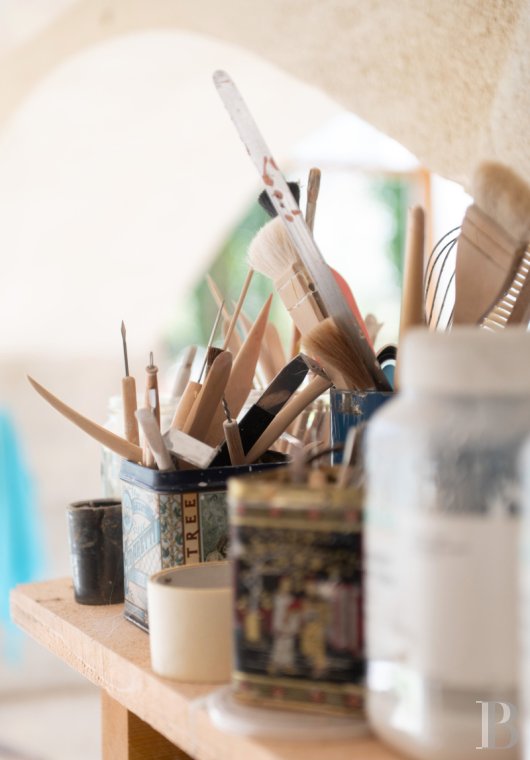
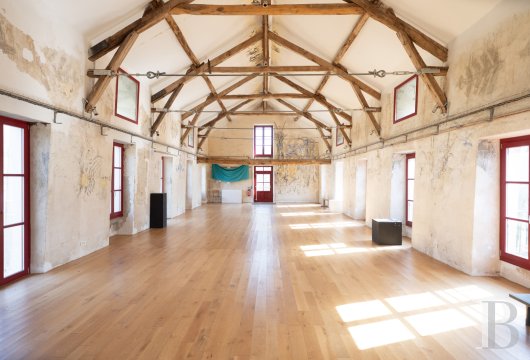
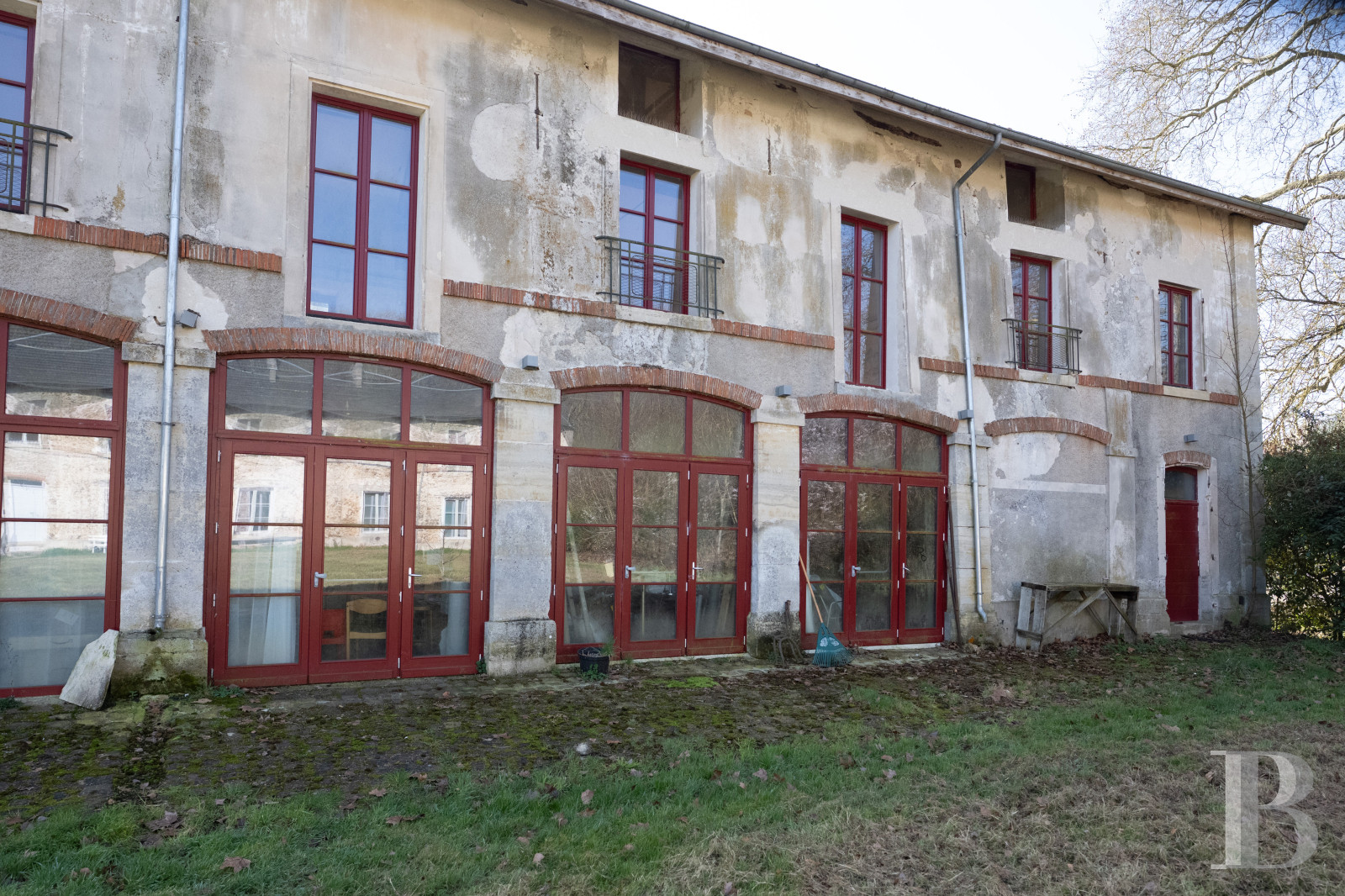
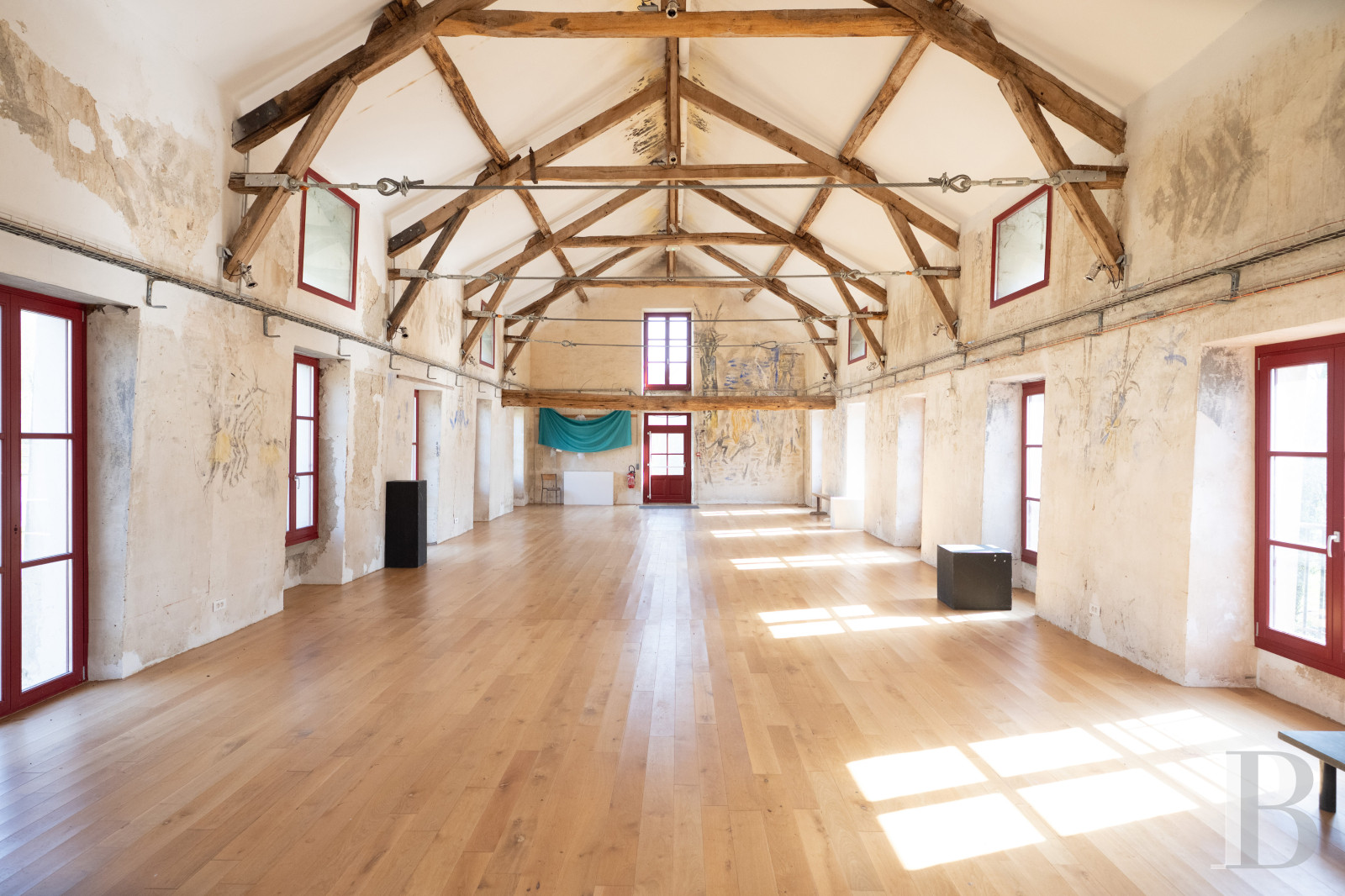
The facade is distinguished by its three imposing glass doors, installed where the former stables once stood. They provide access to large rooms with paved floors, now used as creative workshops. The spaces have been adapted for group or artistic activities. Two narrower doors are located on either side of the windows. One of them opens onto a small entrance hall which includes a toilet and a wooden staircase. Upstairs, a landing leads to a modestly sized bedroom and, opposite, a large room with exposed timber framing and space extending under the sloping roof. Extending from the staircase, a mezzanine overlooks the room. A second side door leads to a ceramics workshop equipped with a kiln. The spaces have a simple layout, faithful to their original arrangement, and are now suitable for artistic or craft uses.
The second outbuilding
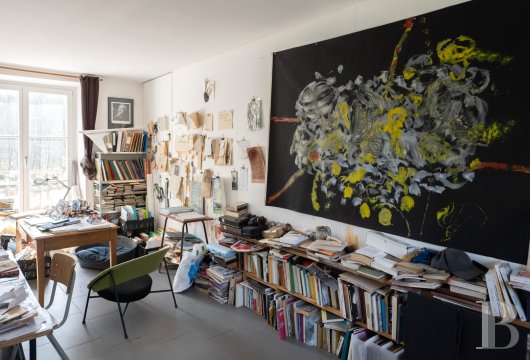
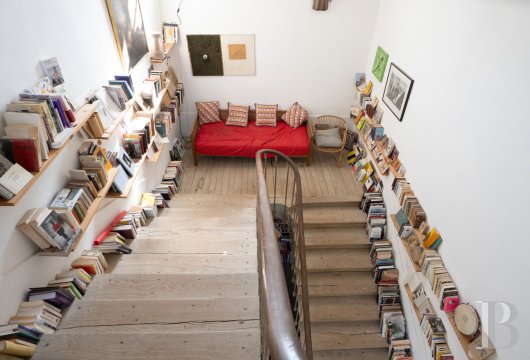
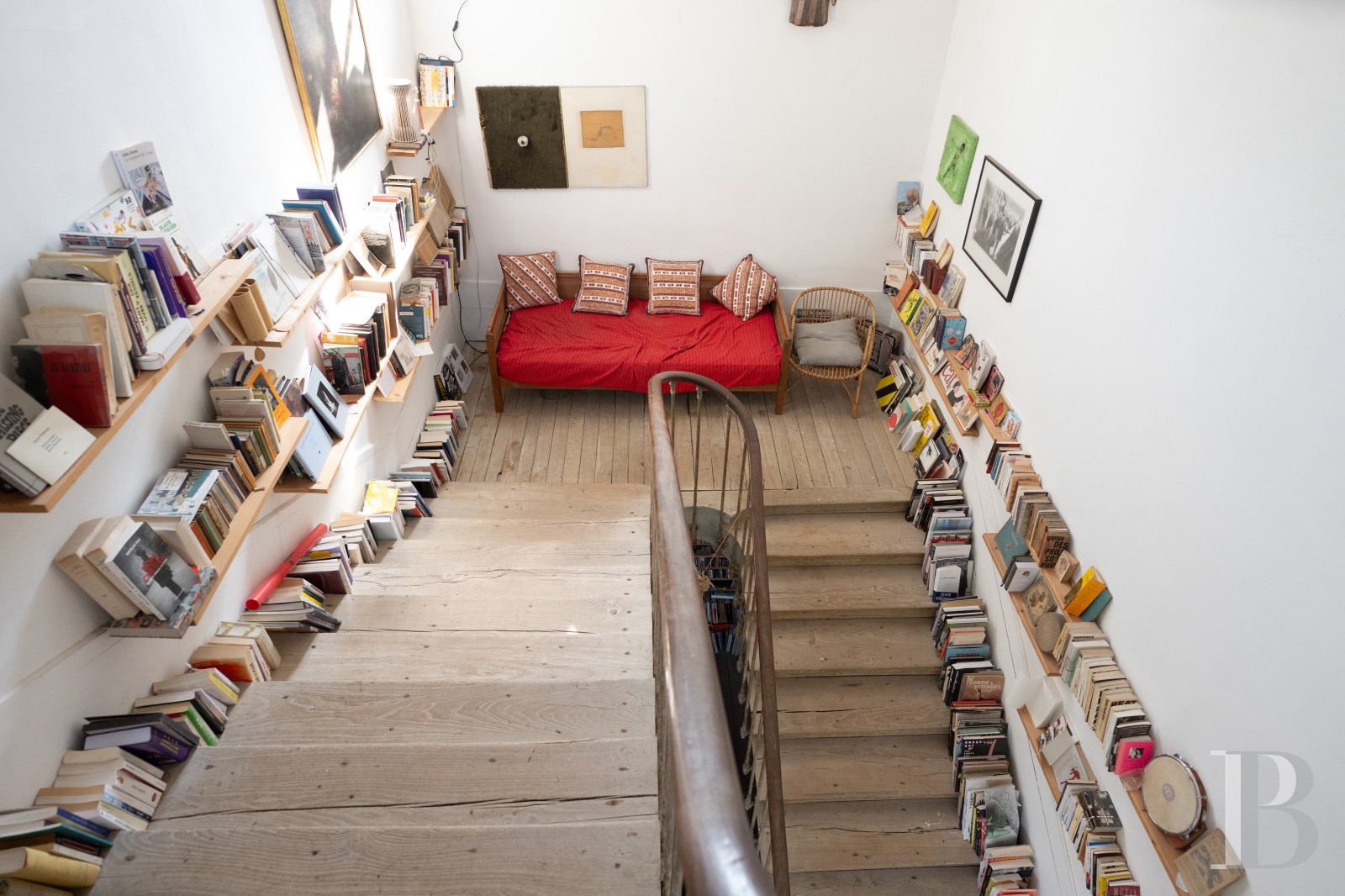
The second outbuilding, which covers a similar area to the first barn, is divided into two independent sections, each with a separate entrance, hallway, and staircase. They are connected on the first level. On one side, an entrance hall leads to a large, open-plan kitchen with two bedrooms opening onto the grounds. Upstairs there are a spacious living room and two bedrooms, one of which opens onto the second section. The attic has been converted into a sleeping area. On the other side, the ground floor is occupied by a large room whose walls are entirely lined with bookshelves. The upper floor comprises two bedrooms, plus another bedroom in the attic. Several bathrooms adjoin the bedrooms. The entire property is clearly laid out, allowing the sections to be independent while also facilitating smooth circulation between them.
The grounds
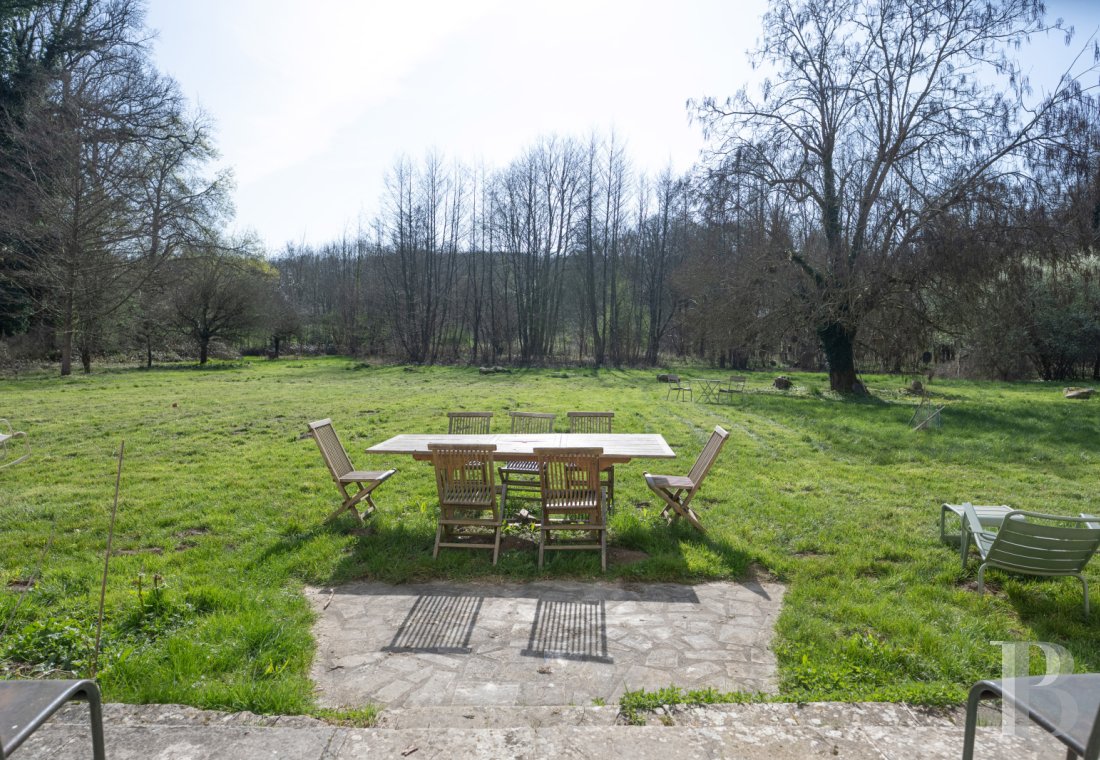
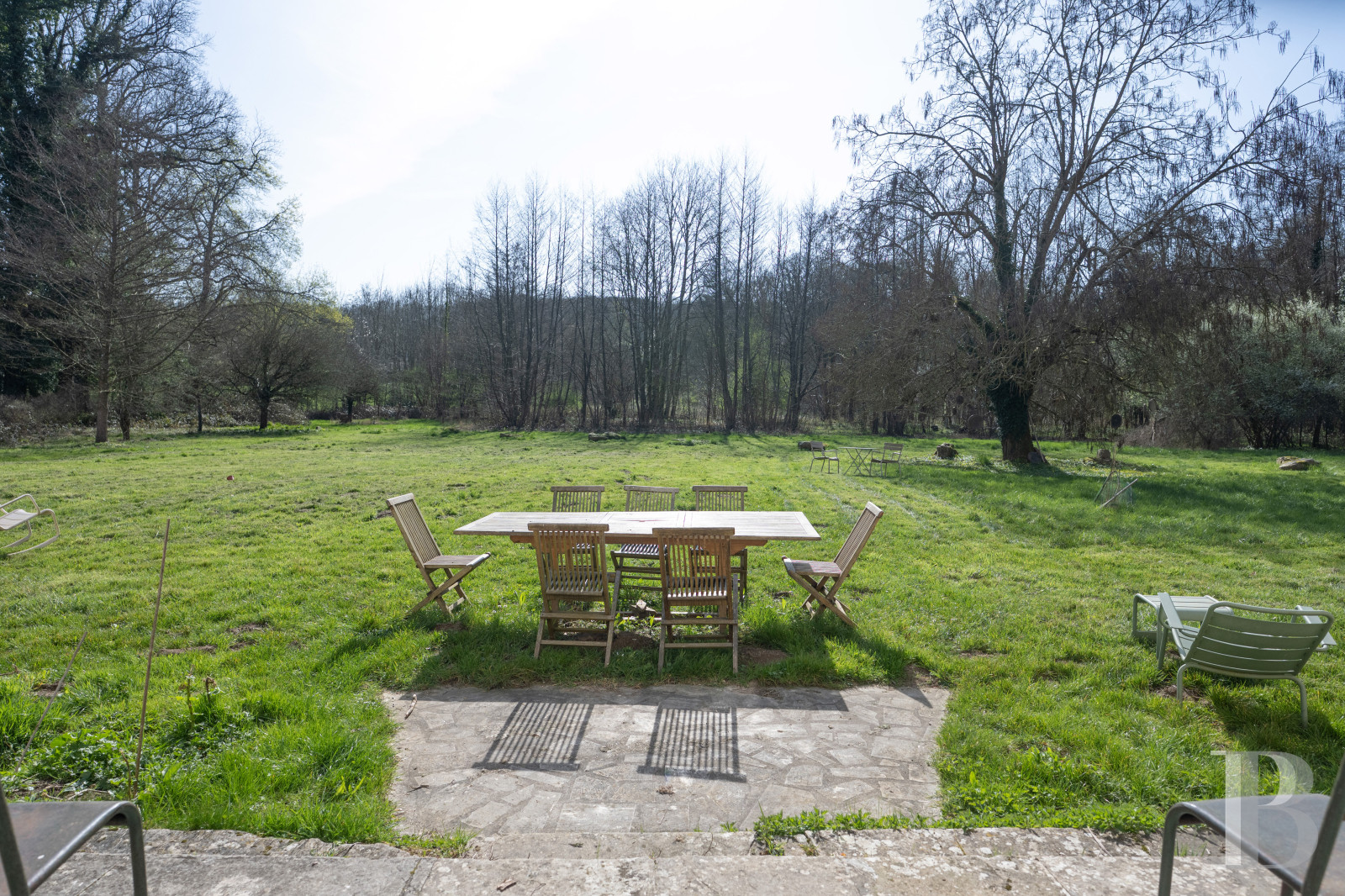
The estate entrance is on the side of the grounds where the barns are located. A narrow path skirts one of them before leading to the chateau, set back from the road. The grounds extend over approximately 2 hectares, laid out around the buildings, and feature expansive lawns that surround the residence, highlighting its facades. The estate is planted with majestic, mature trees, forming a verdant canopy around the building and thickening at the edge of the grounds. A stream marks the property's natural boundary at the back. A swimming pool and a small pond, located near the chateau, complete the ensemble.
Our opinion
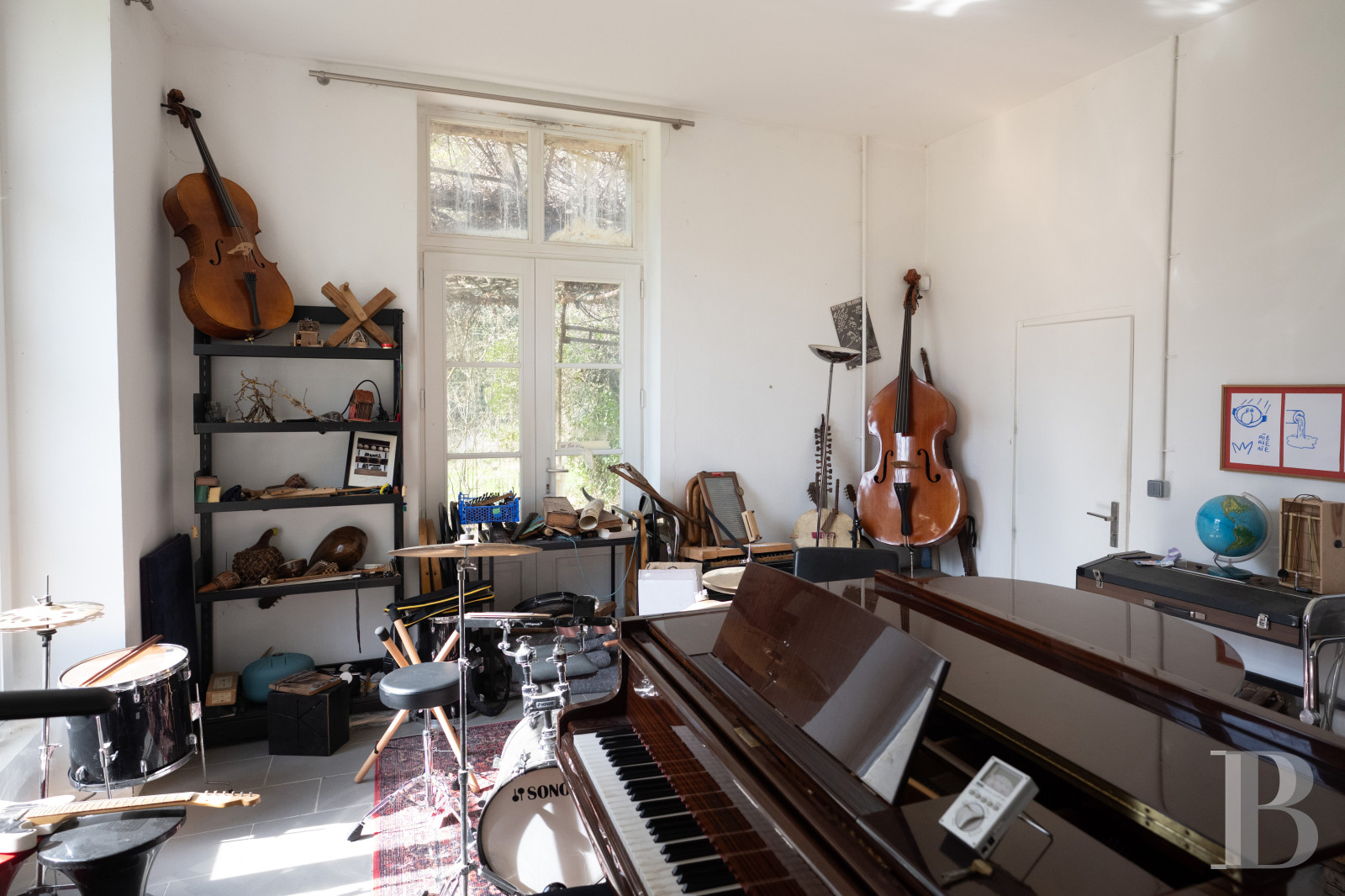
A property whose unique character lies in the transformation of an old manor house into a purpose-built artists' residence. The spaces of the chateau, like those of the barns, have been adapted for creative uses. Everything has been restored. The spaces, studios, and rooms provide an ideal setting for artistic work, teaching, or hosting exhibitions. The property can also easily be used for family purposes, as the site's layout is flexible and adaptable. The numerous trees and the fact that the chateau is set back from the access road give the place a calm and secluded atmosphere. The estate is a unique space, conducive to concentration and creativity. It could be suitable for those seeking an unusual living space, where they can bring various projects to life.
Reference 893525
| Main building floor area | 845 m² |
| Outbuildings floor area | 680 m² |
| Land registry surface area | 3 ha |
| Total floor area | 1525 m² |
French Energy Performance Diagnosis
Information on the risks to which this property is exposed is available on the website: www.georisques.gouv.fr
Share


NB: The above information is not only the result of our visit to the property; it is also based on information provided by the current owner. It is by no means comprehensive or strictly accurate especially where surface areas and construction dates are concerned. We cannot, therefore, be held liable for any misrepresentation.